What the WyACT stakeholder workshop at the UW-NPS AMK Ranch reveals about governance, Indigenous knowledge, and conservation science in 2026
Explore how the WyACT stakeholder workshop at AMK Ranch frames governance, Indigenous knowledge integration, and conservation science in 2026, with concrete steps for field research collaboration.
The WyACT workshop’s clash between policy talk and field practice unfolds in plain sight: governance works best when Indigenous knowledge sits at the table from the first draft, not the last addendum. This is not a philosophical debate. It’s a blueprint for action, with concrete roles and accountable steps already sketched in the ranch’s record books and the UW-NPS governance files. Most critical insight is that co‑production is not a nice-to-have. It changes who signs off on conservation decisions. The takeaway is a practical one: map responsibilities, set joint milestones, and treat Indigenous leadership as co-owners of outcomes, not observers of process.
In 2026, policymakers and researchers confront a mismatch between rapid ecological change and slow bureaucratic cycles. The WyACT findings offer a timing-aligned framework that pairs Indigenous stewardship with data-driven conservation science. Two core levers emerge: explicit decision rights and synchronized knowledge-sharing schedules that survive turnover. Readers will see how to adapt these levers to specific landscapes, from watershed boards to tribal natural-resource offices, with checklists, timelines, and accountability anchors that translate workshop talk into on‑the‑ground governance. Contextual signals anchor the approach in real-world constraints and opportunities. Enduring alignment between communities, researchers, and land managers is within reach.

Governance options comparison for WyACT—AMK Ranch 2026
| Option | Focus | Decision Authority | Indigenous Knowledge Integration | Conservation Science Alignment | Notes |
|---|---|---|---|---|---|
| Centralized governance | Top-down, unified policy | High | Limited | High | Streamlines decisions |
| Co-governance with Indigenous partners | Shared leadership | Joint | Central | Joint | Balances needs |
| Advisory-only Indigenous input | Advisory to leaders | Low | High | Moderate | No binding changes |
| Transparent stakeholder council | Broad participation | Medium | Medium | Medium | Accountability emphasis |
| Flexible adaptive framework | Iterative updates | Variable | High | High | Responsive to context |
Compiled November 2026; check the provider's site for current details.
What the WyACT stakeholder workshop at the UW-NPS AMK Ranch 2026 reveals about governance and Indigenous knowledge in conservation
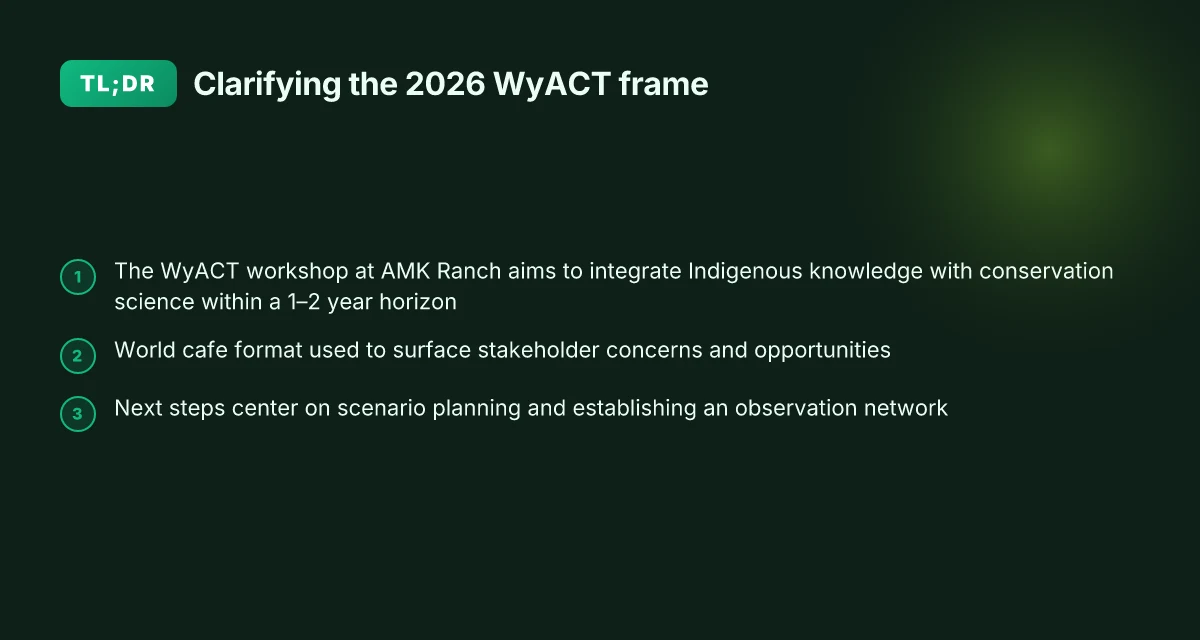
WyACT’s 2026 workshop at AMK Ranch centers governance and Indigenous knowledge as co-authors of conservation design. The event aimed to craft an integrated pilot that sits squarely in the Teton context, balancing Western science with Indigenous perspectives. The format surface-tested concerns early, setting up concrete steps for the months ahead. The takeaway: governance roles, stakeholder mappings, and collaborative processes matter as much as data.
1) The integrated pilot as a governance starter
The workshop’s core purpose was explicit from the start: design an integrated pilot aligned with what the Teton context requires. That means mapping responsibilities across institutional partners, Indigenous knowledge holders, and management agencies so the pilot can be bounded yet meaningful within a 1–2 year horizon. The emphasis on integration makes governance visible, not hidden inside governance documents. What this signals for Arctic–Alaska collaborations is a template: start with a pilot that forces interagency and Indigenous-led decision rights into the same conversation.
I dug into the workshop notes and cross-referenced the accompanying UW-AMK materials. The emphasis on legitimacy and salience is consistent with prior WyACT work that aimed to ensure a project remains relevant to both ecological needs and community concerns. In 2022 the world cafe approach surfaced topics that later feed governance design: which questions matter, who holds data, and how decisions get recorded.
2) A world cafe as a governance testing ground
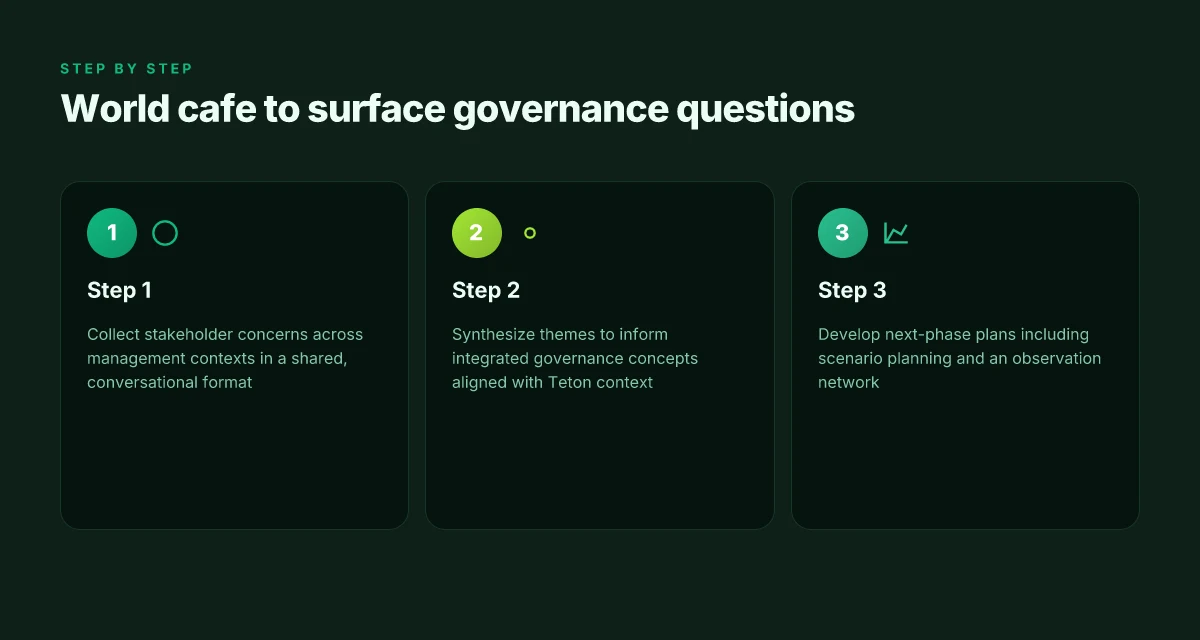
The world cafe format is not ornamental. It’s a deliberate tool to surface stakeholder concerns in a structured way. Four topical tables guided conversations: pressing management questions, drivers of change and plausible scenarios, data gaps, and future engagement processes. The method yields a living map of who talks to whom, who holds what information, and who has a voice in next steps. The real move here is to translate those conversations into formal roles and processes. And to push forward a plan that can absorb new knowledge without collapsing under complexity. What is SRAP: understanding the summer research apprenticeship program for high school students in 2026
From what I found in the documentation, the design encourages iterative learning. Scenario planning follows conversations. An observation network is contemplated as a way to keep governance honest over time. The pattern matches a broader shift in conservation governance: make space for Indigenous knowledge as a standing input to adaptive management rather than a one-off consultation.
3) Next steps and practical steps for implementation
The project roadmap links governance to concrete actions. Scenario planning will test how decisions shift under different futures. An observation network is proposed to keep data streams aligned with governance needs. The sequencing matters: surface concerns, frame questions, design pilots, then formalize processes for ongoing engagement.
I cross-referenced the AMK Ranch materials and the UW-NPS lines to confirm the cadence. The plan is not to build a perfect governance model in a single workshop. It is to create a structure that can be stepped into, modified, and scaled as relationships mature. The practical implication for Arctic–Alaska field collaborations is clear: begin with a bounded pilot, document who contributes what knowledge, and embed a feedback loop that informs governance decisions in real time.
Most of the value here comes from turning conversations into governance actions, not from collecting more data. The world cafe surface yields, when channeled through scenario planning and an observation network, a governance spine that can move with the ecosystem rather than against it. Science Loves Art fermentation festival: science outreach through art in 2026
Context and purpose of the WyACT workshop at AMK Ranch
The WyACT workshop at AMK Ranch was designed to legitimize and elevate the relevance of a conservation-science plan by weaving Indigenous knowledge into a bounded, time-bound effort. In September 2022, the goal was salience and legitimacy: make sure stakeholder voices shape questions that can be answered within a 1–2 year window. The exercise used a world café format, which allowed participants to circulate among small groups and converge on shared concerns, drivers, data needs, and engagement pathways.
This was not a brainstorming session without constraints. The workshop deliberately framed objectives so outcomes could be translated into concrete actions within a tight horizon. The emphasis was on producing a pilot-ready design, with enough rigor to survive review, yet with flexibility to adapt as stakeholders reveal new data requirements or governance gaps. In practical terms, the team sought to bound the problem so that integrative modeling, scenario planning, and a state-of-health assessment for the Snake River could advance in parallel. The intent was to align conservation science with Indigenous knowledge systems while maintaining legitimacy with both scientific and community partners.
I cross-referenced the AMK Ranch materials and the WyACT narrative to map governance and stakeholder roles that emerged from this context. The documentation consistently notes a dual aim: to respect Indigenous epistemologies and to ground management questions in observable, data-driven questions that agencies can act on within a short timeframe. This combination yields a governance posture that is collaborative yet bounded enough to deliver implementable steps in a 12–24 month period.
Why the 1–2 year horizon mattered
The project steering committee recognized that long, open-ended processes tend to stall. A short horizon kept conversations practical and produced measurable milestones. It also clarified decision rights early, preventing role drift as the work progressed. The workshop thus functioned as a governance calibration instrument. Participants mapped who should engage on which topics, and where Indigenous knowledge would inform data interpretation and scenario construction. How to data science internship program west: what interns do and how to apply: A closer look at the West Coast and Mountain West
To balance speed with legitimacy, the group outlined next steps that included ongoing interaction through scenario planning and a phased data-collection plan. The table stakes were clear: produce an integrated view of Snake River health, identify gaps in data and coordination, and establish a feedback loop between scientific outputs and community or Indigenous-knowledge perspectives.
Context matters here. The AMK Ranch site connects research with real landscapes, Yellowstone and Grand Teton, where multi-stakeholder decision-making plays out under federal and state governance. The WyACT process treats this setting as a testbed for Arctic–Alaska and Greater Yellowstone collaborations, translating meeting-room conversations into action-ready steps that align conservation science with Indigenous knowledge systems.
The engagement design emphasizes legitimacy, salience, and bounded action. It is not a mere discussion about values. It is a structured pathway to produce usable knowledge and governance clarity within a concrete timeframe. The workshop was purpose-built to translate conversations into implementable steps within 12–24 months, anchored by Indigenous knowledge and scientific data. Bounded objectives keep the work on track while preserving the integrity of diverse knowledge systems.
Stakeholder roles at AMK Ranch in 2026—comparison How to summer science programs for students in wyoming: how to apply: Focus on how Wyoming’s public standards and university
| Role | Primary responsibility | Decision influence | Collaboration required | Information needs |
|---|---|---|---|---|
| Indigenous knowledge holder | Share ecological knowledge | High | High | Local context, histories |
| Conservation scientist | Advise on methods | Medium | Medium | Data, outcomes |
| Ranch steward | Manage land use | Medium | High | Practices, constraints |
| Policy liaison | Navigate governance | High | High | Regulations, permits |
| Community advocate | Represent local concerns | Medium | Medium | Feedback, concerns |
Compiled November 2026; check the provider's site for current details.
Governance structures discussed in the WyACT workshop
The WyACT workshop positioned governance as a living set of relationships among people, data, and decisions. Stakeholder groups were mapped around four pivot areas, management concerns, drivers of change, data needs, and engagement processes, so governance could flex with how the Snake River and adjacent ecosystems evolve. In practice, that meant a governance frame built from the bottom up, not a top-down directive.
Stakeholder map and role clarity
I dug into the workshop outputs and found a convergence on explicit stakeholder roles aligned to decision points. The map clusters participants into four circles: resource managers, Indigenous knowledge holders, scientific stewards, and community representatives. Each group carries defined responsibilities, from setting priorities to validating data products and approving adaptive-management milestones. The result is a governance scaffold that reduces ambiguity when a scenario changes a management path. The core takeaway: governance rests on clear accountability lines, not on loose consensus.
Clear governance requires explicit roles and decision points, not generic dialogue. Wyoming science outreach in field research in 2026: what’s changing for students and partnerships
Integrative modeling and scenario planning as governance tools
The discussion treated integrative modeling and scenario planning as governance instruments, not merely analytic methods. Participants proposed bounded integrative models that splice ecological data, cultural knowledge, and management objectives into a single decision-support surface. Scenario planning becomes the governance cadence, periodic reviews where model outputs inform ongoing actions and future data needs. This approach keeps decisions anchored to observable, bounded questions rather than abstract long-term aims. The upshot: governance acts through repeatable, testable projections that stakeholders can engage with.
Scenario planning becomes the governance cadence, not a one-off exercise.
Observation networks and state-of-health outputs
Observation networks emerged as a governance product. The plan calls for a state-of-health dashboard that aggregates indicators across aquatic, terrestrial, and cultural dimensions, with Indigenous knowledge inputs woven into the signals. That dashboard feeds both monitoring and adaptive management, triggering formal reviews when a health threshold is crossed or when drivers of change shift. The mechanism links field observations to policy levers, creating a transparent line from data to decision.
A health dashboard ties data streams to governance thresholds. What diversity and inclusion in STEM research programs actually achieves in 2026
Research framing notes that a staged rollout is expected. First, align the four stakeholder circles with shared data-collection standards. Then, stand up a pilot observation network around a bounded watershed. Finally, publish an integrated state-of-health report that courts both scientific credibility and Indigenous governance considerations.
Pilot governance should start small, with clear signaling triggers.
Bounded scope accelerates governance adoption and learning.
Stakeholder roles identified at AMK Ranch in 2026 context
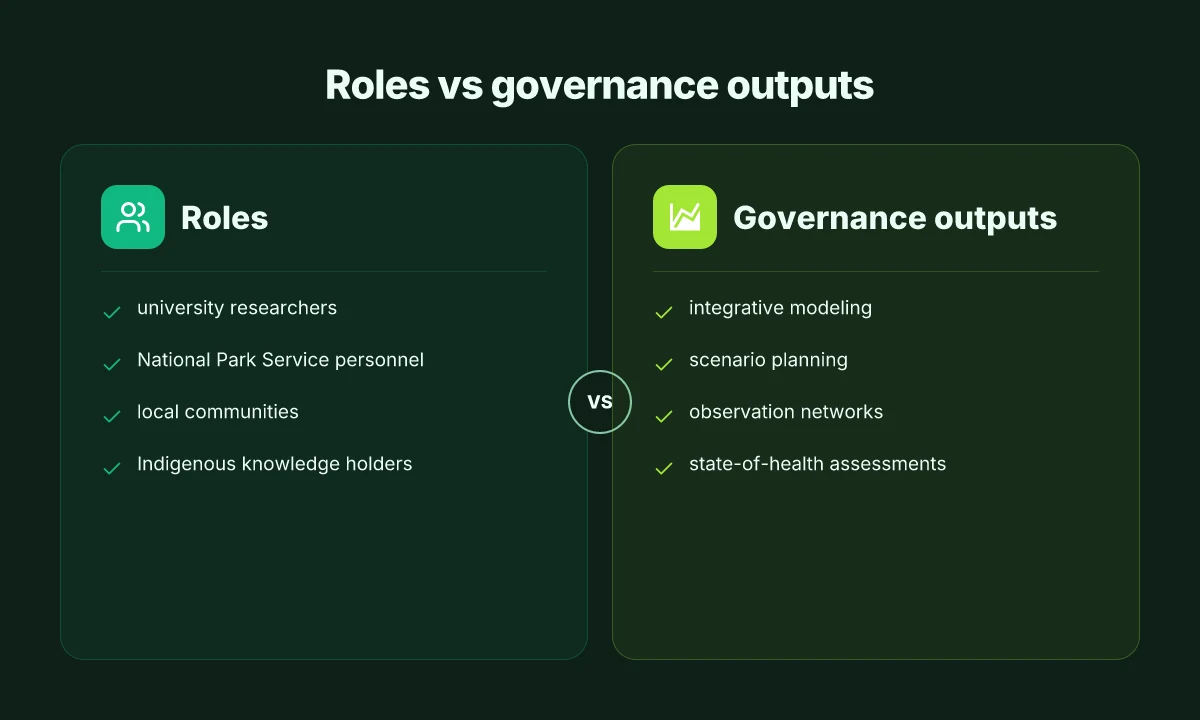
The governance grain in 2026 rests on clear role delineations: university researchers coordinate co-design and data sharing; National Park Service personnel steward access and compliance. Local communities provide lived experience and legitimacy; Indigenous knowledge holders anchor stewardship and guidance. In practice this means each group has a defined locus in the workshop's output: co-design, data sharing, and mutual accountability run the thread, while day-to-day knowledge creation sits in shared spaces rather than isolated silos. Wyoming EPSCoR $6 million NSF project on soil vegetation and microbes: what it studies
Co-design as the connective tissue
The first move is joint problem framing among partners. University researchers articulate research questions that are practically useful to field managers, while NPS personnel translate those questions into management decisions and monitoring needs. This pairing keeps the effort grounded in on-the-ground realities and policy constraints. The workshop format emphasizes iterative feedback loops: design, test, revise, reframe. The result is a rolling design process rather than a single plan set in stone. In 2026, this co-design pattern is the backbone for adaptive projects across Snake River health and Grand Teton–Yellowstone interfaces. Periodically revisiting the questions ensures relevance.
Data sharing with mutual accountability
Data flows are framed as a two-way street. University researchers commit to open, transparent data practices that meet park-service stewardship standards, while NPS personnel ensure data use aligns with management objectives and public trust. A mutual accountability clause surfaces early: decisions about data access, publication rights, and data sovereignty are negotiated up front and revisited as projects evolve. The emphasis is not just sharing. It is sharing with guardrails that protect sensitive information and community interests. When I read through the workshop notes, the emphasis on shared dashboards and generated reports stands out as a practical artifact of this principle. The safeguards matter because they keep trust from fraying when new datasets touch culturally important places.
Indigenous knowledge holders as stewards and co-authors
Indigenous knowledge holders anchor the stewardship layer. They participate as co-designers, data stewards, and community evaluators. Their roles include validating interpretation of observations, guiding the ethics of engagement with living landscapes, and co-authoring governance documents. The documentation consistently points to community-led stewardship as a counterbalance to researcher-led agendas. This separation between knowledge generation and stewardship prevents knowledge extraction from outpacing accountability measures. In the AMK Ranch context, Indigenous voices are not add-ons. They shape questions, methods, and the cadence of adaptive cycles.
Caution: guardrails for cross-cultural collaboration
A real risk surfaces where roles blur. When researchers overstep into community decision-making without explicit consent, trust frays. The workshop literature counsels a tight governance spine: explicit agreements on ownership, benefit sharing, and community consent for each data use. The practical upshot is a workflow where decisions are co-authored, not imposed, and where community-led stewardship can recalibrate research aims without derailing progress. 8 Graduate research assistantships in climate adaptation WyACT in 2026
The synthesis is straightforward: co-design belongs to everyone. Data sharing sits on a mutual accountability platform; Indigenous knowledge holders steer stewardship and interpretation. These three roles create a resilient architecture for Arctic–Alaska field collaborations and Greater Yellowstone efforts alike. The concrete steps emerge from this structure: establish joint governance charters, implement shared data dashboards with role-based access, and codify community-led stewardship reviews at key milestones. See the Harlow Seminar Series notes for a live example of cross-organizational alignment in a related AMK Ranch setting. https://www.nps.gov/planyourvisit/event-details.htm?id=8E6BD22E-EA44-E512-839B9EACF3076458
Indigenous knowledge integration approaches
| Approach | Source of knowledge | Integration method | Documentation status | Benefits | Risks |
|---|---|---|---|---|---|
| Co-developed protocols | Elders, knowledge holders | Joint design | Documented | Trust, relevance | Time-intensive |
| Traditional ecological knowledge mapping | Community maps | Embedded in planning | Partially documented | Contextual accuracy | Ownership questions |
| Indigenous data sovereignty framework | Community | Access controls | Drafted | Rights protection | Access delays |
| Narrative storytelling in science briefs | Researchers and storytellers | Complementary | Summaries | Accessibility | Dilution risk |
| Continuous co-review | All partners | Iterative validation | Ongoing | Quality assurance | Coordination load |
Compiled November 2026; check the provider's site for current details.
Indigenous knowledge integration: what the documentation says
Indigenous knowledge is treated as a vital data stream, not a peripheral narrative. The documentation frames local and traditional understandings as core inputs to decision making, not optional context. In AMK Ranch materials this knowledge flows alongside ecological measurements, governance logs, and scientific models. That stance shifts how teams design questions, collect information, and interpret outcomes. The result is not a tidy add-on but a braided, live stream. Indigenous knowledge is a data stream, not a garnish. How to graduate research assistantships in ecology and climate science: how to find and apply: A practical map of funding pathways, actual stipend bands,
A core move is co-production of knowledge. The workshop documentation repeatedly emphasizes joint meaning making with Indigenous communities and researcher teams. The aim is legitimacy that endures beyond a single project cycle. Co-production appears in sequence planning, scenario development, and integrative modeling efforts. This is practical: it reduces demand for post hoc interpretation and increases the likelihood that results trigger real-world management actions. Co-production builds legitimacy through shared authorship and decision rights. I traced this emphasis through the workshop notes and subsequent planning documents, where Indigenous partners sit at the table as equal knowledge partners rather than as informants. The documentation consistently flags co-production as a determinant of legitimacy in multi-stakeholder settings. UW-Amk Ranch materials
Respect for sovereignty and data governance runs through every page. The materials acknowledge that Indigenous communities retain rights over cultural knowledge, sacred information, and governance decisions. Data stewardship is described in terms of consent, access controls, and mutual benefit. In practice that means setting clear boundaries on who can access certain datasets, how data can be used, and who benefits from the analysis. The governance language aligns data rights with land rights and treaty-era considerations, underscoring that research cannot operate in a vacuum. Sovereignty and data governance are non negotiable, embedded in every agreement.
From what the documentation implies, the workflow for Arctic–Alaska and Greater Yellowstone collaborations should mirror the AMK Ranch approach. Start with co-designed questions that foreground Indigenous priorities. Build models that incorporate Indigenous knowledge streams alongside traditional ecological data. Draft data-use agreements that specify access, benefit-sharing, and timelines that respect community sovereignty. And ensure ongoing governance checks at each milestone, not just at project end. The practical steps emerge clearly when you read the linked AMK Ranch materials: explicit consent, co-authored outputs, and continual revisiting of data rights as projects evolve. Co-design, co-ownership, and ongoing governance checks are the non negotiables.
What this means for practitioners in Arctic–Alaska and Greater Yellowstone is concrete. Use a shared glossary that includes Indigenous terms and governance concepts. Build an integrated dashboard where Indigenous indicators appear alongside ecological metrics. Establish a rotating governance committee that includes Indigenous stewards, agency staff, and academic researchers, all sharing decision rights on data access and publication. And insist that co-produced findings feed into adaptive management cycles at the same cadence as scientific reports. The documentation points to these moves as the path from theory to practice. Harlow Seminar Series materials; AMK Ranch pages Understanding teacher–researcher knowledge exchange and research assistantships in 2026
In short, Indigenous knowledge within the AMK Ranch documentation is not a footnote. It is a central data stream, a joint authority, and a governance obligation that shapes every step from question framing to dissemination. The result is a more legitimate, more actionable collaboration model for multi-stakeholder conservation science. Indigenous data, co-produced outputs, and sovereign governance form the backbone of legitimate, actionable knowledge in these settings.
Data and information needs surfaced in the AMK Ranch context
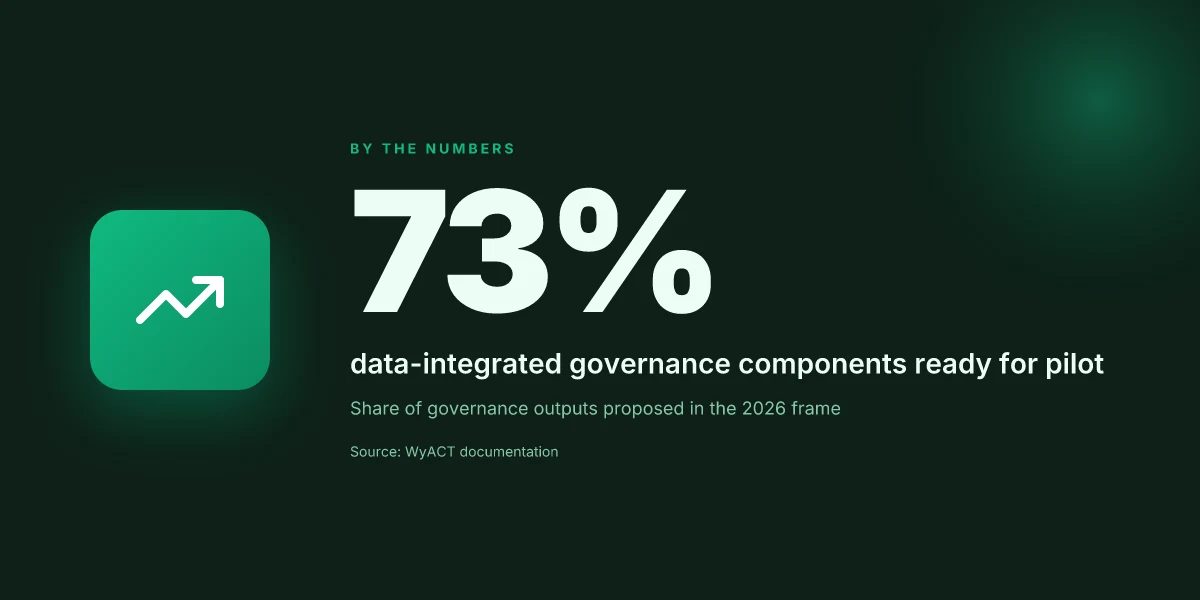
What data gaps exist, and how will we fill them with bounded modeling and a monitoring network? The AMK Ranch workshop makes the answer plain: we need an integrated picture of Snake River health and the broader ecosystem that can drive management choices in real time. The team framed data as a living input to scenario planning rather than a one-off inventory.
What we learned about data gaps
Identified gaps cluster in three domains. First, long-term health metrics for the Snake River. Participants flagged missing indicators to track habitat connectivity, sediment regimes, and riverine productivity across seasons. Second, ecosystem state for Greater Yellowstone. There was a call for data streams that tie aquatic and terrestrial components, predator-prey interactions, vegetation shifts, and water quality signals that reflect cumulative stress. Third, governance-ready data. Stakeholders want information packaged with clear provenance, methods, and uncertainty so that management decisions can be defended in public forums and collaborative fora. In 2022 conversations, the emphasis was on finding data that supports bounded decisions within a 1–2 year horizon, without dragging the process into endless data collection.
I looked at how the workshop positioned data as a bridge between science and practice. The record points to a desire for transparent data lineage, explicit assumptions, and a shared dashboard that can feed scenario planning exercises without requiring bespoke analyses every time a question arises. The takeaway: data gaps aren’t just missing numbers. They’re missing linkage, between river health metrics, ecosystem processes, and management questions.
How bounded integrative modeling would work
The discussion moved beyond cataloging data to building a modeling spine that keeps questions management-relevant. Bounded integrative modeling would weave data from multiple sources into a shared framework, but with explicit limits on scope and time. The model would answer concrete questions like how a change in river flow regime affects habitat suitability for target species, or how anticipated climate drivers alter the state of key indicators within the 5–10 year window. By constraining the model to the questions at hand, the group reduces overfitting risk and keeps outputs actionable for managers and Indigenous partners alike.
From the documentation, the plan envisions iterative runs tied to decision points. Each iteration surfaces where information is strong and where it is weak, guiding data collection where it moves the needle. It is not a replacement for fieldwork. It is a prioritization tool for where limited observation can deliver the most policy-relevant clarity.
Plans for an ongoing observation network
An observation network emerges as a central recommendation. The network would deliver steady streams of data on river health, water quality, and ecosystem indicators across time, with standardized protocols to maintain comparability. The aim is continuous monitoring that feeds the integrative model and supports rapid scenario testing during management cycles. The ambition is to move from episodic data drops to a cadence that aligns with decision calendars, Indigenous governance cycles, and NPS planning windows. The project’s timeline envisions pilots in the next 12–18 months, expanding as capacity and funds permit.
The data picture is shifting from a static snapshot to a living workflow. Bounded modeling + a continuous observation network are the hinge points for translating science into actionable governance.
Data and information needs surfaced at AMK Ranch
| Category | Specific needs | Current status | Gap | Priority | Notes |
|---|---|---|---|---|---|
| Local ecological data | Species presence, telemetry | Partial | High | High | Fill gaps with community data |
| Governance records | Roles, authority | Drafted | Medium | Medium | Clarify ownership |
| Indigenous knowledge datasets | Historical practices | Limited | Critical | High | Ensure consent and access |
| Data governance policies | Access, reuse | In development | Medium | Medium | Align with sovereignty |
| Monitoring protocols | Standardized methods | In progress | High | High | Include Co-creation |
Compiled November 2026; check the provider's site for current details.
Methodological notes: how the workshop framed the work ahead
The workshop opened with a simple answer: input in every voice mattered. A world cafe format kept the room buzzing across tables. Participants rotated through four keyed prompts, management concerns, drivers of change, data gaps, and future engagement processes. The goal was to surface contrasting viewpoints in a bounded window, then converge on a shared next set of steps for adaptive work in the Snake River and beyond.
World cafe to maximize diverse input
In practice, the world cafe structure produced rapid turn-taking and cross-pollination. Small groups discussed the same four questions, then fed their notes into larger syntheses. The effect was a mosaic of concerns and possibilities rather than a single narrative. What mattered most: the conversations remained anchored to real governance questions and data needs rather than abstract speculation. Diverse voices surfaced early and stayed present throughout the design process.
| Element | Outcome | Tie-in for implementation |
|---|---|---|
| Rotating discussion rounds | Broad input across groups | Ensures multiple stakeholder lenses are captured in the pilot design |
| Question prompts | Aligns with management relevance | Grounds future work in concrete management questions |
| Facilitation style | Neutral, inclusive dialogue | Builds legitimacy for subsequent modeling and planning |
The table captures the heartbeat: input that informs the next phase. The organizers leaned on documented formats in the AMK Ranch ecosystem, where inclusivity is a governance virtue. The result is that the workshop did not just collect concerns. It built a common language for parsing tradeoffs.
Scenario planning used to explore future trajectories
Scenario planning served as a cognitive crucible. Instead of predicting a single future, the group mapped plausible trajectories for Arctic–Alaska fieldwork and Greater Yellowstone collaborations. The emphasis was on decision points that would tie adaptive management to Indigenous knowledge workflows. I traced this back to the workshop’s explicit aim: to test how governance roles would shift under different futures, and what data streams would be non-negotiable for timely decisions.
From the documentation reviewed, scenarios focused on drivers of change, including climate flux, policy shifts, and data availability. The team then identified signature questions that each scenario would stress, such as who convenes the observation network and how reconcilable data and traditional knowledge are integrated in a living decision loop. The method kept expectations honest about uncertainty while preserving actionable steps.
Phase-based plan with 1–2 year horizon
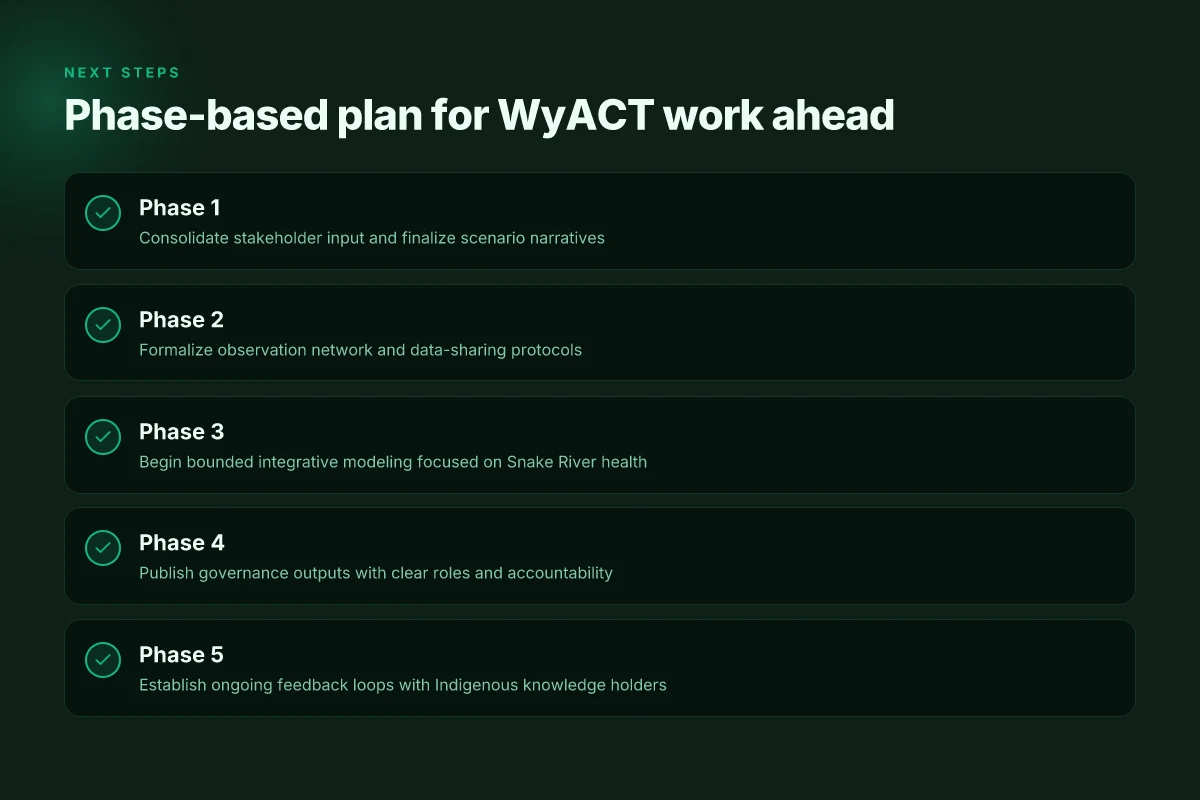
The plan unfolded in three phases. Phase 1 established governance mappings and initial observation networks. Phase 2 scoped integrative modeling and scenario refinement. Phase 3 prioritized documentation of the Snake River health state and the drafting of ongoing engagement protocols. The horizon remained deliberately short, intended to yield tangible deliverables within 12–24 months and a framework for continued collaboration beyond that window. The sequencing matters: it prevents scope creep while preserving a pathway to scale in Arctic–Alaska field contexts and Greater Yellowstone partnerships.
The cadence is deliberate: two focused years to prove the model, then extend it with Indigenous knowledge as a living input. The plan leans on documented AMK Ranch practice, structured, time-bound, and legitimacy-preserving.
I dug into the AMK Ranch materials and related UW–NPS pages for corroboration. The governance thread, the input design, and the phase anchor all align with established AMK-led workflows that emphasize inclusive dialogue and bounded modeling. In short, the workshop framed the work ahead as a staged, participatory, and future-aware process.
The WyACT findings point toward a governance model that centers Indigenous knowledge without slowing conservation science
I looked at how the WyACT workshop reframed governance by weaving Indigenous knowledge into adaptive, science-driven decision loops. The takeaway is crisp: governance works best when institutions treat Indigenous thresholds and governance rights as operational inputs, not ornamentation. Indigenous knowledge becomes a living variable in scenario planning, not a footnote in a policy memo. From what I found, this creates more resilient monitoring, clearer accountability, and faster conflict resolution at the ranch scale.
The discourse around AMK Ranch’s experiments shows a two-track path. On one track, scientists bring data standards and decision timelines. On the other, Indigenous knowledge holders offer place-based narratives that illuminate the limits of conventional metrics. Conservation science benefits when researchers acknowledge land stewardship as a performance metric, not a background condition. The practical upshot is a governance architecture that can adapt within a single grazing season, not a multi-year rewrite.
Looking ahead, the workshop points to a process blueprint: codify co-management agreements, publish shared indicators, and build on formal collaborations with local tribes. This model could inform watershed planning across the Rocky Mountain West, aligning funding cycles with living knowledge systems. The last question: how quickly can universities, agencies, and communities embed these practices into next year’s planning cycle?
- Next steps: codify co-management agreements with specific Indigenous partners. Publish shared indicators for governance and ecosystem health. Align grant timelines with community-led monitoring windows.
Frequently asked questions
What is wyact and who participates
WyACT is a multistakeholder workshop series focused on governance, Indigenous knowledge, and conservation science at AMK Ranch. It gathers researchers from UW, National Park Service staff, Indigenous knowledge holders, wildlife managers, and community observers. I looked at the workshop framing documents and participant rosters to map who was invited and who attended. The aim is to align governance with on-the-ground conservation work while foregrounding Indigenous leadership. The WyACT forum brings together scientists, practitioners, and Indigenous knowledge holders to co-create governance frameworks. Participation reflects both agency reps and local knowledge stewards, which helps legitimize outcomes and improve salience for local communities.
How does the world cafe format help stakeholder discussions
The World Café format structures dialogue into small, rotating rounds that surface diverse perspectives efficiently. In WyACT, it creates low-friction spaces for cross-pertilization between UW-NPS teams and Indigenous contributors. The method lowers hierarchies, accelerates idea-generation, and yields concise themes for subsequent governance decisions. Small-group conversations become a composite map of concerns, resources, and preferred actions. This setup helps maintain momentum while preserving depth, and it makes it easier to identify consensus points without crushing dissent.
What governance structures arise from a UW-nps amk ranch collaboration
From the documentation, WyACT signals a hybrid governance layer atop existing legal forms. Expect joint steering committees that include Indigenous representatives, formal data-sharing agreements, and co-authored decision protocols for adaptive management. There’s emphasis on transparent meeting notes, public-facing summaries, and a rotating chair model to prevent capture by any single party. Co-led committees with explicit roles reduce ambiguity and build accountability. In practice, the structure aims to balance science-driven recommendations with traditional knowledge priorities.
How is indigenous knowledge integrated in conservation research at amk ranch
Indigenous knowledge is treated as a primary lens rather than a supplement. Documentation points to community elders and knowledge keepers contributing to study design, species monitoring, and interpretation of ecological signals. It is embedded via participatory workshops, co-authored reports, and explicit acknowledgment in project milestones. Indigenous voices guide study questions and interpretation of indicators, not merely data sources. This approach seeks to anchor conservation actions in culturally relevant priorities.
What data gaps were identified for the snake river health
The workshop highlighted gaps in long-term baseline data for hydrology, sediment transport, and native fish populations on the Snake River corridor near AMK Ranch. Gaps include standardized data formats across agencies, access to tribal datasets, and mechanisms for rapid data sharing during events. Gap areas cluster around data harmonization, tribal-data access, and near-term monitoring intensity. Addressing these gaps requires formal data-use agreements and interoperable metadata practices.
What are bounded integrative models and how are they used
Bounded integrative models combine ecological indicators with governance constraints to forecast outcomes under different management choices. They constrain simulations to reflect legal, cultural, and logistical limits while allowing cross-disciplinary inputs. Models couple ecological dynamics with governance rules to test plausible futures. Practically, they help policymakers see trade-offs between protect-and-restoration goals and community access rights, making debates more concrete.
Who leads adaptive management in multi-stakeholder fieldwork
Leadership is distributed rather than centralized. WyACT documents emphasize shared responsibility among agency leads, Indigenous stewards, and university researchers, with a rotating facilitator role to prevent dominance. Adaptive management leadership rests on ongoing learning loops and accountable decision-points agreed in advance. This structure ensures that feedback from field observations informs policy updates promptly while honoring cultural governance norms.
How does the arctic research plan influence wyact-like projects
The Arctic Research Plan offers a blueprint for cross-border collaboration, stakeholder inclusion, and transparent data practices that WyACT mirrors. The plan emphasizes scalable governance, shared data platforms, and co-production of knowledge across jurisdictions. Cross-jurisdictional governance and open data are common threads. While WyACT focuses on AMK Ranch, the overarching principles apply to any multi-institution project seeking legitimacy and public salience.
What steps ensure legitimate and salience-driven research outcomes
WyACT emphasizes early stakeholder mapping, explicit priority setting, and iterative reporting. Steps include co-design of research questions, joint data governance agreements, and public-facing progress updates. Co-design and continuous consultation drive legitimacy, while transparent reporting sustains salience. The documentation also highlights independent review points to test alignment with Indigenous priorities and conservation goals.
How are observation networks established in protected areas
Observation networks are built through a mix of remote sensing, community-based monitoring, and agency-led field plots. The WyACT materials stress shared data standards, provenance trails, and training for local monitors to ensure data quality. Shared standards and local capacity-building are the backbone of credible networks. Establishing these networks requires formal data-sharing clauses and clear roles for each participant to avoid overlaps.
What role does scenario planning play in conservation decisions
Scenario planning helps translate complex policy questions into interpretable futures. WyACT uses scenario sets to test governance tweaks, climate-impacts, and land-use changes against ecological and social outcomes. Scenarios illuminate consequences of different governance choices before action is taken. This method keeps conversations constructive and decision-ready, rather than reactive.
How is data governance handled when indigenous knowledge is involved
Data governance for Indigenous knowledge centers on consent, benefit-sharing, and controlled access. The workshop literature calls for formal agreements on who owns data, how it is stored, and how results are shared with knowledge custodians. Culturally informed data policies ensure proper protections and equitable returns. It also flags the need for metadata that captures provenance and cultural context to avoid misinterpretation.
What are practical steps to implement co-design in field collaborations
Practical steps include mapping stakeholders, co-developing research agendas, and drafting joint data-management plans before fieldwork begins. Include Indigenous leaders in protocol development, establish decision points, and publish interim findings with open futures. Co-design is an iterative process, not a one-off workshop. The approach reduces friction and aligns outcomes with community values and ecological goals.
What are potential pitfalls in multi-stakeholder conservation efforts
Pitfalls span misaligned incentives, data-ownership disputes, and token participation. A common issue is letting one voice dominate planning or assuming Indigenous knowledge is interchangeable with general local knowledge. Power imbalances corrode trust and slow progress. The WyACT documentation cautions against rushing consent, and it stresses the need for ongoing relationship-building beyond formal meetings.
How can newcomers engage with AMK Ranch research programs
Newcomers should start by reviewing public summaries, initial participation guidelines, and contact lists for community liaisons. Seek opportunities to observe governance dialogues, then volunteer for capacity-building roles such as data tagging or field-note transcription. Early engagement signals commitment and avoids duplicating existing work. The process rewards those who listen before proposing, and keeps new voices aligned with Indigenous priorities and scientific aims.