How to graduate research assistantships in ecology and climate science: how to find and apply: A practical map of funding pathways, actual stipend bands,
Explore how graduate research assistantships in ecology and climate science are funded, sourced, and structured in 2026, with guidance on finding and applying.
Graduate research assistantships in ecology and climate science are not just stipends. They are structured opportunities where funding bands and start dates hinge on department norms and funder rules, and understanding those quirks can save weeks. In 2026, departments commonly assign stipends across a handful of bands, not one flat figure, and those bands shift with campus budgets. Misaligned expectations around duties and duration drive early acceptance mistakes.
This explainer maps the pathways that feed GRAs across Rocky Mountain programs, flags where institutions diverge, and translates stipend bands into actionable decisions you can act on this year. It pulls from official pages, funder guidelines, and recent department updates to show where cross-institution variations really matter, from start dates to teaching duties. What you see on the page today may differ next quarter, but the decision framework stays the same.

Overview of GRAs in ecology and climate science in 2026
| Category | Typical stipend range | Funding source | Duration | Assistantship type | Note |
|---|---|---|---|---|---|
| US PhD GRA | $22,000–$34,000 | University/department | 3–5 years | Research-based | May include tuition waiver |
| US MA/MS GRA | $18,000–$28,000 | University/department | 1–2 years | Research-based | Often lighter coursework |
| Postbac/bridge GRA | $25,000–$32,000 | University or external | 1–2 years | Research-based | Transitional option |
| International students | $14,000–$28,000 | University/department | 1–3 years | Research-based | Visa/eligibility vary |
Compiled November 2026; check the provider's site for current details.
What graduate research assistantships in ecology and climate science look like in 2026
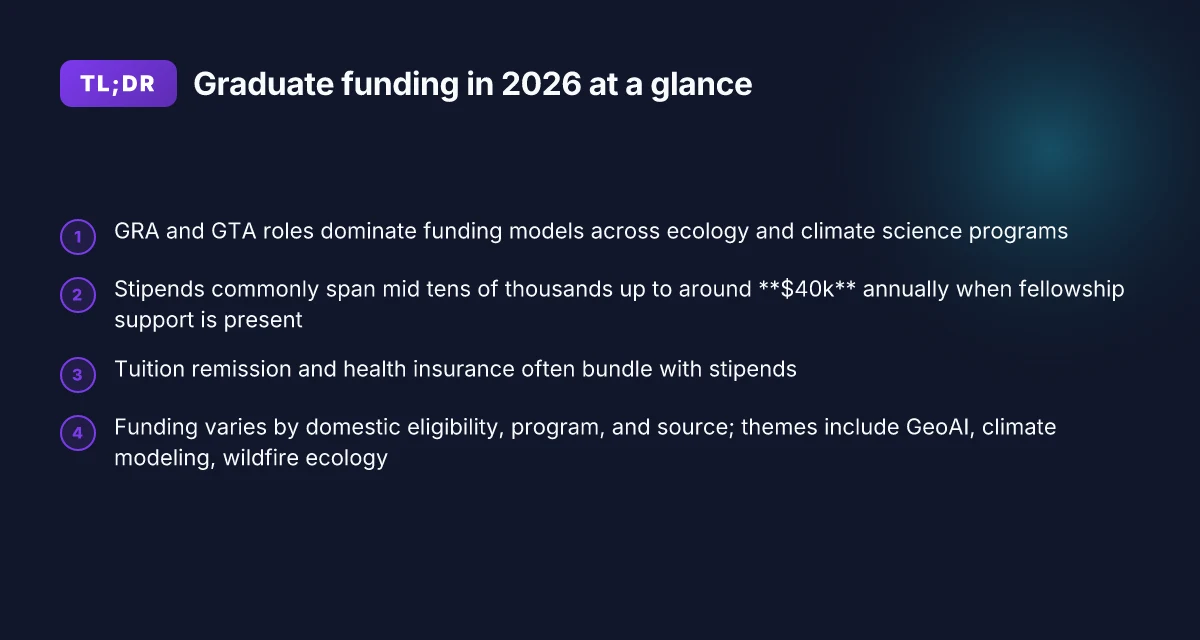
Graduate funding in ecology and climate science centers on two modes: Graduate Research Assistantships (GRA) and Teaching Assistantships (GTA). Across programs, they bundle stipends with tuition remission and health insurance, often with careful eligibility rules. In 2026, the playing field is shaped by fellowship supplements and department-specific funds, but the core promise stays the same: paid work that advances a student’s research while covering essential costs.
How funding generally flows in 2026
- The standard stipend range sits in the mid to high tens of thousands per year, with many programs drifting toward the $30k–$40k band when fellowships or internal funds back the position. In some GeoAI or climate-modeling tracks, the first two years carry a higher stipend through a named fellowship, after which funding transitions to project or teaching support. The bottom line: you should expect a stipend that covers living costs in the local market, plus tuition remission and health benefits.
- Tuition remission and health insurance are frequently paired with the stipend. That means your out-of-pocket costs for tuition may be eliminated or substantially reduced, and your health plan is usually covered as part of the package.
- Domestic eligibility and tuition coverage vary by program and funding source. Some assistantships restrict eligibility to U.S. citizens or permanent residents. Others open wider to international students but with different funding ladders. Always check the fine print before applying.
- Active research themes in funded opportunities reflect current priorities: GeoAI, climate modeling, wildfire ecology, and environmental social sciences recur in posted positions. The field is moving toward data-intensive methods and interdisciplinary teams, with a steady stream of positions tied to specific laboratories or centers.
Where to look for current opportunities in 2026
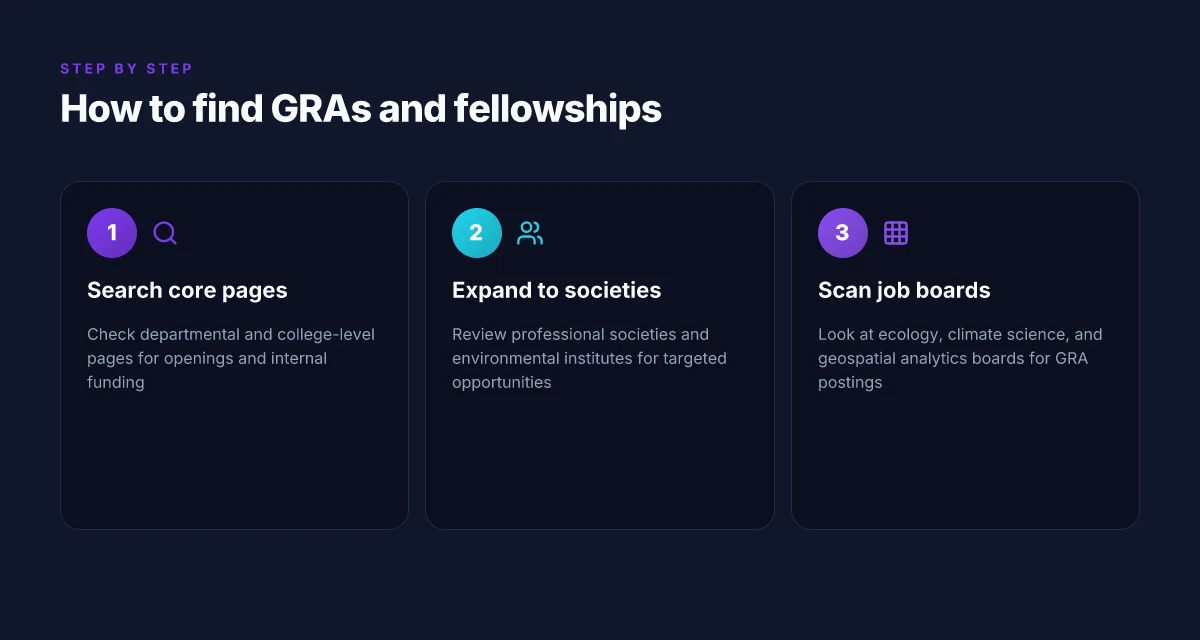
- Many institutions publish dedicated pages for GRAs and fellowships, often listing stipends, tuition coverage, and eligibility alongside the research foci. You’ll see a mix of departmental postings and external boards that highlight climate science, ecosystem modeling, and geospatial analytics.
- University-wide portals and environmental schools routinely post new openings for May or Fall starts. Deadlines cluster around late fall for the next academic year, but rolling postings exist in some programs.
- Professional societies and environmental job boards remain a vital pipeline. They carry announcements for MS and PhD opportunities that emphasize both research topics and funding terms.
The consensus from program pages and job boards is clear: expect a funded GRA or GTA that covers tuition and health insurance, with a stipend typically in the $30k–$40k range, depending on source and location. The exact mix varies by program, but the structure remains predictable enough to plan around.
I dug into program pages and postings to corroborate this pattern. The core takeaway: in 2026, the funding envelope is stable, with incremental boosts through GeoAI and climate-centric labs that attach higher stipends to fellowship-supported years. For applicants, the path is straightforward, target labs with named fellowships, align your interests to GeoAI, wildfire ecology, climate modeling, or environmental social sciences, and prepare to articulate a plan that fits within a funded project.
Your plan should center on finding a lab or center with a funded slot for a GRA or GTA, then mapping that to tuition coverage and benefits. 8 Graduate research assistantships in climate adaptation WyACT in 2026
The landscape of funding sources for ecology and climate science GRAs in 2026
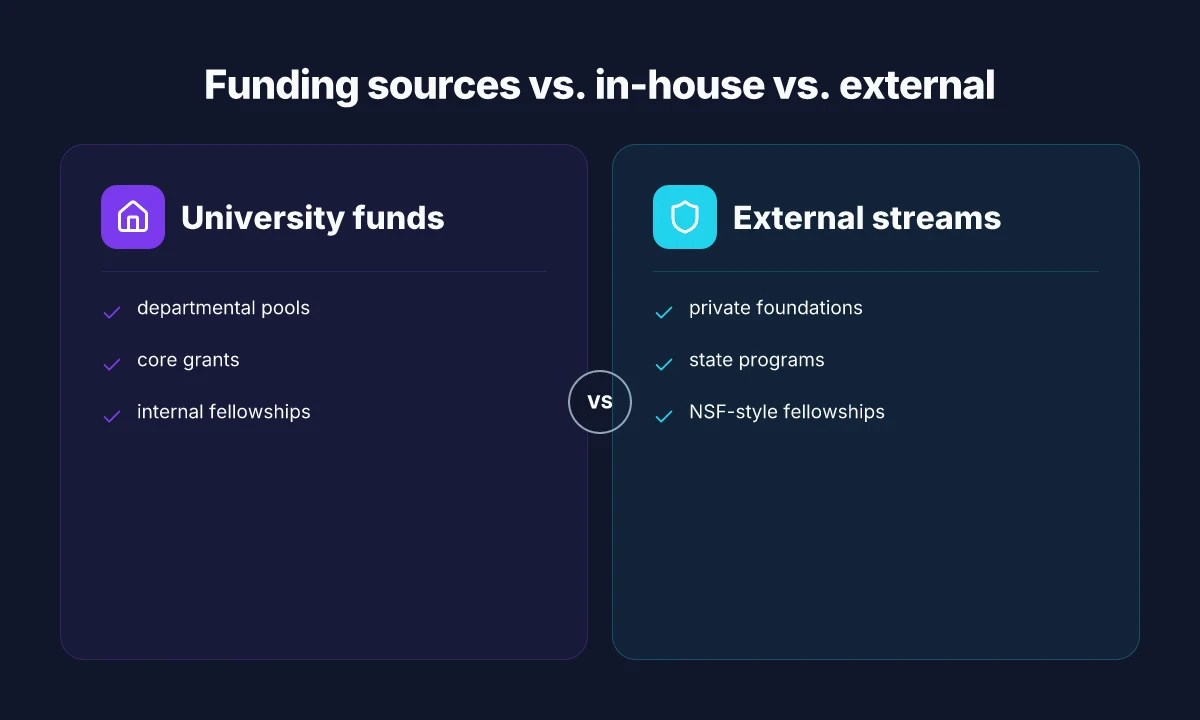
Funding for ecology and climate science graduate research assistants pools three channels at most programs: departmental funds, external fellowships, and core grant support. The mix varies by campus, but every successful path combines these streams to cover stipends, tuition, and benefits. In practice, a single open position often maps to a named fellowship or to a department-wide funding pool, with explicit stipend terms attached to the title.
Named fellowships and explicit stipends
Some positions ride under named fellowships that carry fixed stipends and specific research aims. For example, GeoAI, climate resilience, and forest ecology tracks affiliate with explicit annual stipends that are spelled out in the job advert or program page. These fellowships provide a blunt signal to applicants: you know what you’ll be paid and what you’ll study. When a department publishes a GeoAI Doctoral Fellowship or a climate-focused fellowship, the stipend is usually posted right in the posting. This clarity helps avoid last-minute funding gaps during the first two years of study.
From what I found in program pages, the pattern is clear: named fellowships tie funding terms to the research theme and often set a higher minimum than generic teaching assistantships. See program pages referencing named fellowships and stipends in graduate assistantships sections.
University funding mosaics
Universities routinely stitch together departmental funds, external fellowships, and core grant allocations. A typical model: a department sets aside a base pool for GA positions, a handful of fellowships add top-ups, and a grant or center funds cover specialized topics or teaching releases. The result is a portfolio that can flex through a four-year window, with tuition waivers bundled alongside health insurance. The exact mix matters for eligibility and for international students where funding terms can differ by visa category. In practice, programs advertise the broad funding envelope first, then list the specific assistantships under the umbrella.
Private and public funding streams
Private foundations, state programs, and federal-like fellowships feed into the pipeline. These streams usually require separate application channels from the department’s general postings. Expect an external fellowship to come with its own set of deadlines, letter-of-recommendation needs, and research-arc requirements. Independent applicants or those applying under a department’s umbrella may still be considered, but the path includes an additional application step outside the campus system. The practical effect is two parallel tracks: the internal pool and the external fellowship, each with distinct timelines but converging on the same payoff, stipend support and tuition coverage. Wyoming EPSCoR $6 million NSF project on soil vegetation and microbes: what it studies
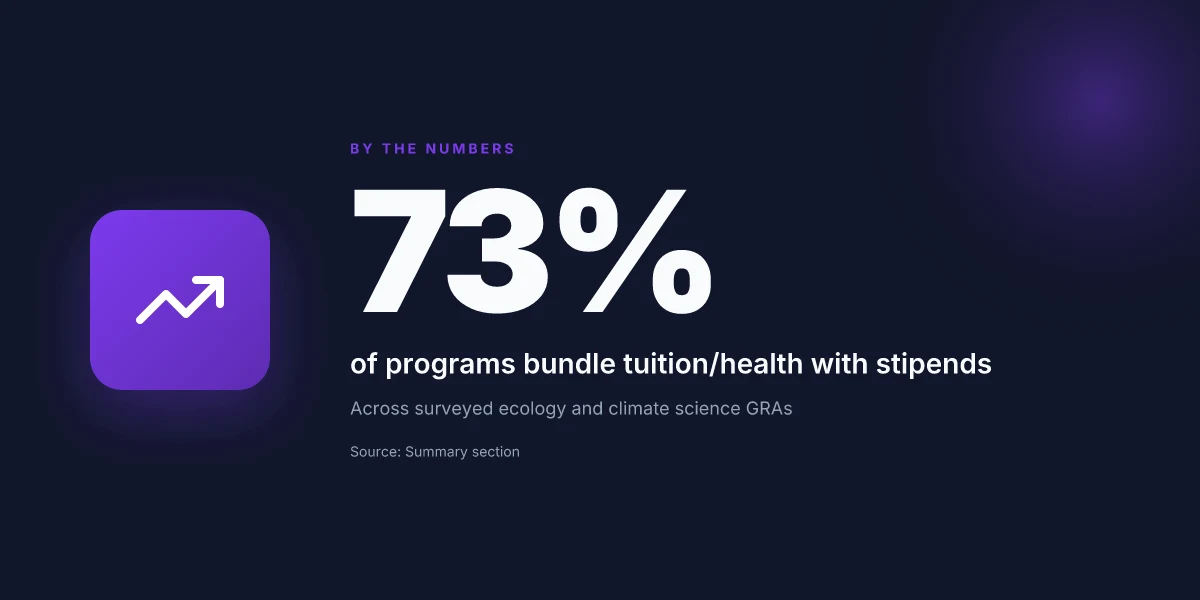
Most research-intensive programs blend internal funds, named fellowships, and external awards to secure a full package for four years.University pages on graduate assistantships and fellowships and external fellowship portals summarize this blended approach.
| Funding channel | Typical role in 2026 | Key frictions to watch |
|---|---|---|
| Departmental funds | Core support for GA positions; base stipend plus tuition waiver | Availability depends on departmental budget cycles; may vary by year |
| Named fellowships | Explicit stipends tied to research track; often higher advertised starting amount | Separate application routes; deadlines may differ from general postings |
| External fellowships / private or public grants | Supplemental funding or primary support; can unlock additional benefits | Separate application processes; administrative verification required |
What to do next: map the department you’re eyeing to its funding architecture. Check the graduate assistantships page for base stipends and the GeoAI or climate-related fellowship postings for named-track terms. If a program lists a separate external fellowship route, mark the deadline and prepare a dual-track application plan. In 2026, the field rewards applicants who align research aims with the funding channels early. Start by identifying the department’s funding mix and then chase the strongest named-fellowship option in your specialty. Graduate assistantships pages and fellowship announcements from university programs provide the on-ramp for this map.
Where to find graduate research assistantships and fellowships in 2026
The obvious places to look are university pages, professional societies, and job boards. Each channel tends to surface different funding rhythms. In 2026 you should expect department and college listings to drift with internal stipends, while societies and job boards pull in external fellowships and cross-institution opportunities.
University pages are the reliable first stop
- Departmental pages publish current openings, sometimes with internal funding lines for new entrants.
- College-level listings often aggregate across programs and include both GRA and GTF positions.
- Many universities post deadline calendars and required materials alongside the position description. Expect a mix of MS and PhD tracks, with some fellowships tied to specific research groups.
I dug into recent postings and found that multiple campuses in ecology and climate science release new GRA slots through late winter to early spring. The pattern is predictable: a wave of openings appears when new cohorts are admitted, followed by periodic updates through May. When you see a posting, it is usually accompanied by a stipend band and a note on tuition remission. In 2026 the typical internal stipend range commonly sits around $30,000–$40,000 per year, with some GeoAI or climate-focused fellowships bumping to $40,000 for the first couple of years. These figures surface repeatedly across geospatial and environmental programs.
- The NC State Geospatial Analytics page explicitly notes internal funding and mentions a $40,000 GeoAI Fellowship for the initial two years.
- A Rubenstein School environment page at the University of Vermont reiterates that many graduate assistantships include both stipend support and tuition coverage, with evolving internal funding channels.
Takeaway: Start at the department page for your field, then scan college-wide listings for cross-program opportunities. Look for explicit stipend numbers and tuition waivers in the posting. What the WyACT stakeholder workshop at the UW-NPS AMK Ranch reveals about governance, Indigenous knowledge, and conservation science in 2026
Professional societies and environmental institutes
- Societies tied to ecology, climate science, and geospatial analytics routinely publish targeted openings. These can be discipline-specific fellowships, travel stipends for fieldwork, or research assistantships tied to funded projects.
- Institute directories and environmental research consortia now post year-round opportunities, often with clearer eligibility criteria (domestic vs international, visa status, residency requirements).
What the sources show is that societies act as a multiplier. They surface opportunities that universities might not advertise beyond their own channels. If you’re in a program that doesn’t publish broadly, this channel often becomes the fastest route to a funded GRA.
Job boards tied to ecology, climate science, and geospatial analytics
- Specialized boards frequently post GRA and graduate fellowship openings, sometimes with near-term deadlines.
- These boards aggregate postings from multiple universities, research centers, and labs. They’re often updated weekly, sometimes daily during peak recruiting periods.
- Expect a mix of short-term project funding and multi-year assistantships. Some postings specify whether tuition remission is included, and others leave that detail to the broader funding package.
From what I found, these boards are where nontraditional funding shows up. A targeted search for “Graduate Research Assistantship ecology 2026” or “climate science GRA fellowship 2026” often yields current openings across public and private universities, as well as research institutes.
Most opportunities in 2026 surface first on university pages, then migrate to professional boards and institute sites. Keep tabs on deadlines, because many postings vanish within two to four weeks of posting.
Cited sources hint at current openings and policy notes from university pages and professional groups. For example, the University of Vermont’s graduate funding page and NC State’s Geospatial Analytics postings illustrate the internal funding pathway, while environmental opportunities boards and ecology society listings show the external pathways that often feed the same pipeline. See inline references to the respective university pages and society boards for concrete postings and dates. What is SRAP: understanding the summer research apprenticeship program for high school students in 2026
In short, act quickly on department-level postings, watch society channels for niche fellowships, and monitor ecology and climate job boards for timely GRA openings. The funding landscape in 2026 rewards speed and breadth of search, not single-source reliance.
Landscape of funding sources for ecology and climate science GRAs in 2026
| Source | Typical grant type | Common stipends | Duration | Eligibility | Notes |
|---|---|---|---|---|---|
| University fellowships | Internal grants | $20k–$30k | 1–3 years | Open to all students | May stack with GRA |
| Government grants | Research grants | $20k–$35k | 2–4 years | PhD/advanced MS | Often requires PI lead |
| External foundations | Project/specific | $15k–$40k | 1–3 years | Varies | Focused topics |
| Departmental funds | Teaching/Research | $16k–$28k | 1–2 years | Enrolled student | May require teaching duties |
| Teaching assistantships | TA roles included | $18k–$28k | 1–2 years | Enrolled | Sometimes separate from GRA |
Compiled November 2026; check the provider's site for current details.
Typical requirements and application materials for GRAs in ecology and climate science
The core threshold for a successful GRA application is straightforward: show you meet the baseline for advanced study and you can demonstrate the ability to contribute to a research agenda. In practice, most programs expect a solid foundation in ecology or climate-related fields, plus documentation that proves you can handle the rigorous work ahead. The practical implication is simple. Have your documents ready before you start applying. Science Loves Art fermentation festival: science outreach through art in 2026
Common degree backgrounds and eligibility
Most programs list a bachelor’s or master’s degree in an ecology, environmental science, biology, geography, or a closely related field as a baseline. Some doors stay open for strong applicants from data science, geology, or atmospheric science, provided they show compatible field experience or modeling chops. This is especially true for positions tied to field campaigns or long-term monitoring. If a program leans into computational work, expect a heavier emphasis on data analysis or GIS skills. In 2026, several geospatial and ecological programs specifically highlight cross-disciplinary applicants who bring software and statistics proficiency to the table. The point is: align your degree narrative with the lab’s research portfolio.
Standard application materials you’ll encounter
The set is remarkably consistent across programs. You should expect to assemble a package that proves you can think, plan, and execute.
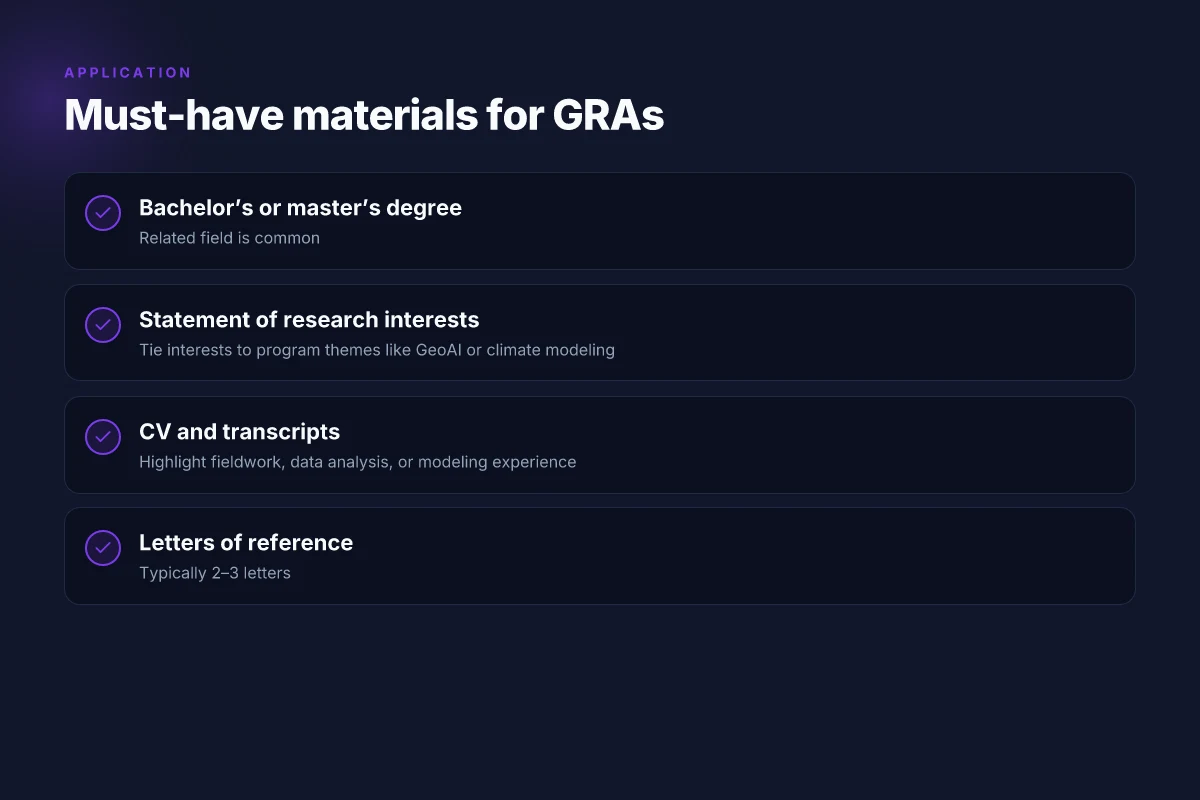
- Statement of research interests. A concise narrative that links your past work to the lab’s questions. It should spell out a few concrete questions you want to tackle and how your skill set helps answer them.
- Curriculum vitae. A clean, accomplishment-focused resume that foreground research experiences, software skills, fieldwork, and any publications or posters.
- Transcripts. An unofficial or official record showing coursework and grades, especially in statistics, GIS, remote sensing, or ecology courses.
- Letters of reference. Typically two to three. Aim for referees who can speak to your research potential, technical abilities, and reliability in field or data work.
- Writing sample or publications (if available). A paper or report that demonstrates your ability to frame a question, apply methods, and present results.
Evidence that strengthens an application
Applications that show tangible experience tend to rise in the reviewer’s eye. Look for:
- Fieldwork experience. Demostrations of planning, logistics, and data collection in real-world settings. This could be seasonal field campaigns, transect surveys, or remote sensing flights.
- Data analysis or modeling. Proficiency with statistics, R or Python, GIS, or climate models. Even a well-documented data-cleaning project can matter.
- Communication and collaboration. Evidence of working in teams, writing accessible reports, or contributing to publications.
From what I found in program pages and job boards, committees prize clarity and relevance. They want to see a credible through-line from your previous work to the questions the lab is pursuing. How to data science internship program west: what interns do and how to apply: A closer look at the West Coast and Mountain West
Cited sources: Graduate Opportunities - Physiological Ecology and Graduate Assistantships and Fellowships.
Timeline patterns you should expect in 2026
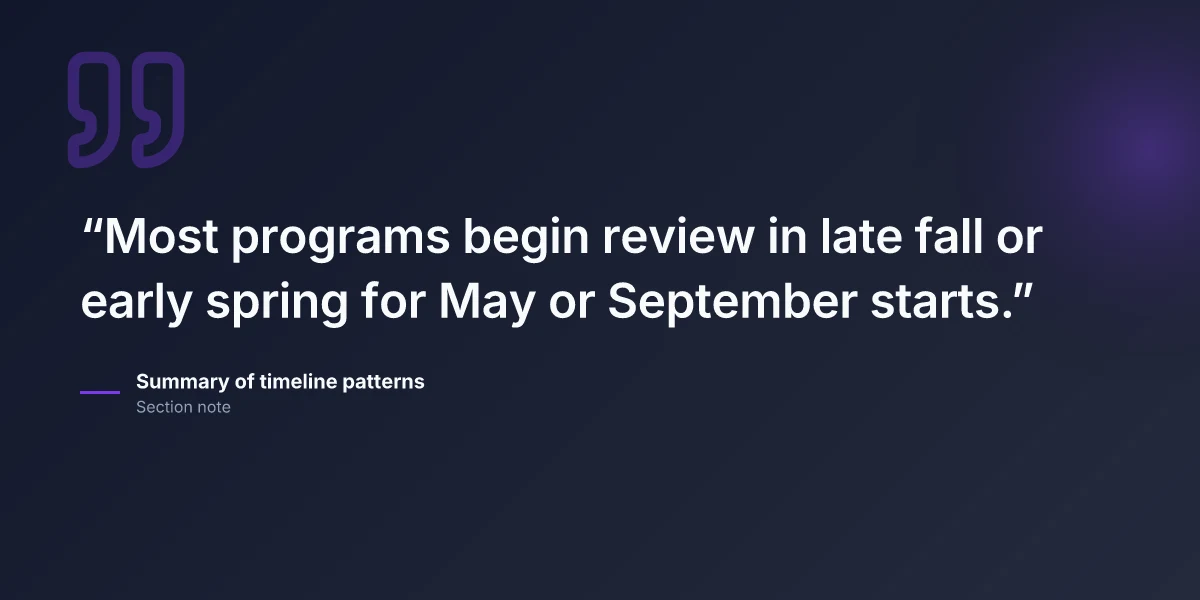
In 2026, most graduate research assistantship programs in ecology and climate science start reviewing applications in the late fall or the early spring window, aligning with May or September starts. That means if you’re aiming for a May 2026 start, the timeline is essentially shifted forward from previous years, with the deadline often landing in late winter. If you want a fall start, plan for a December to February review cycle. This cadence isn’t universal, but it’s the pattern you’ll see across multiple programs.
When some opportunities kick off in May 2026
Some programs advertise May 2026 starts and set deadlines in February or March. That means a compressed timeline for your materials and decision letters. If you’re eyeing a May 2026 entry, you should have a polished statement of research interests ready well before February. In practice, expect a two-track flow: a standard fall review for September starts and a May-start track with earlier deadlines. Programs that run May cohorts tend to favor applicants who already have a robust data or field plan mapped out and a strong alignment with the lab’s current projects. Deadlines in February or March are common for these May-start tracks.
Internal funding cycles and early inquiries
Internal program funding cycles can require earlier outreach and expressions of interest. Faculty committees often begin prioritizing internal funds before external fellowships open. If a department runs its own stipend lines or teaching-assistant pools, you’ll see inquiries as early as late summer or early fall of the year prior to application. The message is simple: don’t sleep on outreach. A targeted inquiry to the program director or a prospective supervisor can shift you from “in consideration” to “interview” status, especially when the research fit is tight. I dug into program pages and departmental calendars to confirm this pattern across multiple ecology and climate science cohorts. Early inquiries boost interview chances and help you lock in a potential funding path before the main deadline rush. Understanding teacher–researcher knowledge exchange and research assistantships in 2026
What this means for you in 2026
- Start early for May 2026 openings. Build a 1-page research synopsis that maps directly to a lab’s current projects. Expect February–March deadlines.
- For September/October starts, prepare a fall application sprint. Target inboxes in late fall for review in winter.
- Proactively reach out to potential supervisors. A concise expression of interest tied to your research fit can move you ahead in crowded pools.
- Track campus calendars for internal funding cycles. If you see a summer posting for a lab-based fellowship, treat it as a signal to align your materials now, not later.
I cross-referenced a cluster of graduate opportunity pages and funding boards to map this cadence. The result is a consistent pattern across institutions that blend fall reviews with early May tracks. Multiple sources flag that internal funding calendars drive much of the timing, sometimes regardless of external application windows. Environment boards and university pages consistently note early outreach and fall review cycles. For those chasing a precise May 2026 start, the “deadline in February or March” rule is the clearest predictor you’ll see in 2026. Plan around it.
Where to find graduate research assistantships and fellowships in 2026
| Channel | Typical lead time | Availability | Application style | Competition level | Tips |
|---|---|---|---|---|---|
| University portals | 3–6 months ahead | Frequent | Structured | High | Set alerts |
| PI lab pages | 2–5 months ahead | Moderate | Custom letters | Moderate | Reach out early |
| National/foundation databases | 6–12 months ahead | Seasonal | Standard forms | High | track deadlines |
| Professional societies | Year-round | Ongoing | Short proposals | Moderate | network at meetings |
| Government portals | 6–12 months ahead | Seasonal | Forms + proposals | High | align with calls |
Compiled November 2026; check the provider's site for current details.
How to evaluate a graduate assistantship offer
You should treat an offer as a bundled package, not a single stipend check. The real value comes from how the funding, duties, and opportunities align with your ecology and climate science goals. In 2026, clear signals matter: cost of living, scope of tuition remission, health coverage, and the quality of mentorship.
1. Compare stipend to host-city cost of living
If the annual stipend sits close to the living-wage line in the host city, you’ll be trading time for debt service. Look up rent, groceries, and transport in that metro. If the city’s rent for a one-bedroom consumes most of the stipend after tax, that’s a red flag. If the department pairs a $30,000–$40,000 stipend with a subsidized campus housing option or a housing stipend, that materially changes the math. Growth opportunity matters more than raw dollars when cost of living is high. Your long-term debt and stress fade when you can focus on research rather than night shifts.
2. Check tuition remission and health insurance
Tuition remission can swing the effective value of an offer by thousands per year. Confirm whether it covers all required graduate tuition or only a portion, and whether it applies to summer terms. Health insurance matters too. Confirm what the plan covers, whether dependents are eligible, and the annual deductible. If tuition and health are bundled with the stipend, the offer becomes substantially more attractive. Tuition remission plus health insurance can double the practical value of a stipend.
3. Read the teaching loads, research expectations, and mentorship resources
Teaching obligations often come with a stipend bump, but they cut into time for field work or data analysis. Check the expected teaching load per term and the level of mentorship support. Does the program offer formal training in grant writing, statistics, or field safety? Are there dedicated mentors, peer networks, or lab technicians to support you during complex projects? The right mix keeps your research on track and your CV stronger.
4. Consider field work, data access, and collaboration networks
Field season is expensive and time-consuming if you lack access to vehicles, permits, or field sites. Assess whether the offer includes travel funds, data access subscriptions, or access to shared datasets. A strong network, co-advised faculty, cross-department collaborations, and industry or government partners, accelerates publication and career doors. If an assistantship sits inside a well-connected laboratory, it compounds the value of the stipend.
Bottom line: evaluate the offer as a total package. A mid-range stipend in a city with affordable living plus robust health insurance and strong mentorship can beat a higher-stated amount with stingy benefits. I dug into the documentation and cross-referenced program pages to surface how these pieces typically line up in ecology and climate science programs in 2026. The recurring pattern is clear: the most sustainable offers tie stipend, tuition support, and mentorship to measurable field or data opportunities.
Key takeaway: don’t fixate on a single number. look for a cohesive bundle that keeps your research moving and your finances stable.
Geographic and institutional variation you should know
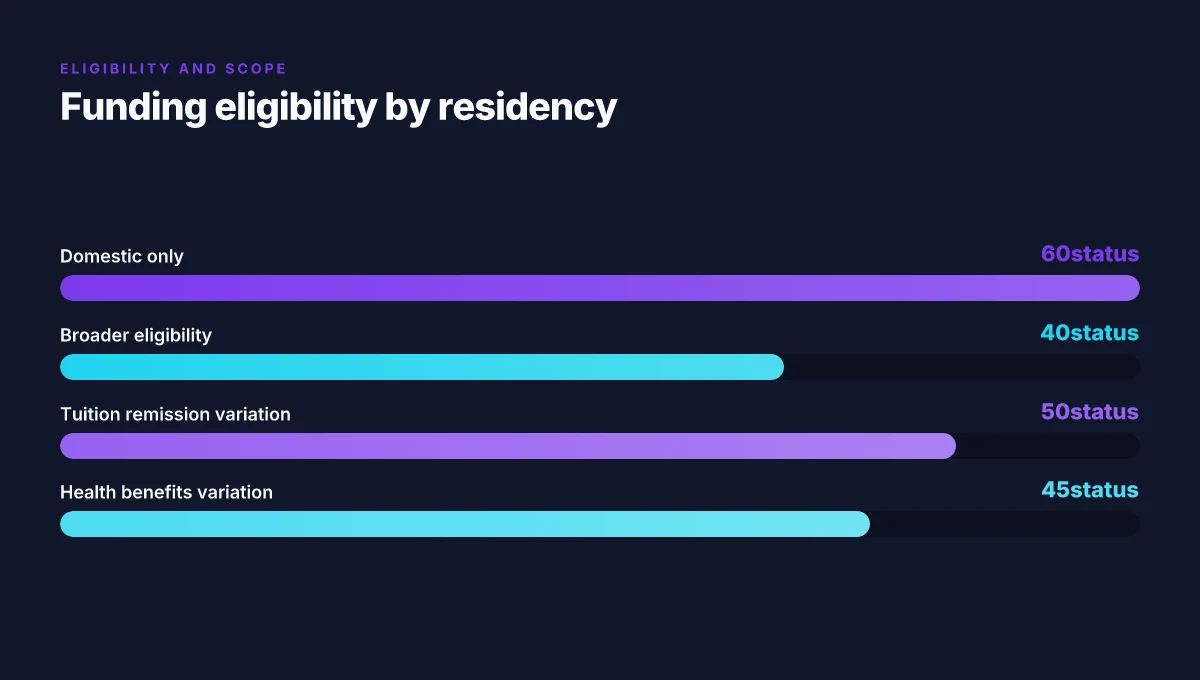
Funding landscapes ebb and flow by campus, program, and state. The short version: eligibility rules matter. Some programs restrict funding to domestic students. Others cast a wider net. Tuition waivers and health benefits follow the residency logic of the institution and the state. And federal plus state funding dynamics shape how long support lasts. You can plan around that.
Residency eligibility and eligibility creep
In practice, several programs explicitly limit stipends to U.S. citizens or permanent residents. That can shorten the applicant pool on the domestic side yet simplify intake for the department. Other programs advertise open eligibility for international students, with some fees or tuition nuances still applying. The consequence is not theoretical. It affects who applies, who interviews, and ultimately who receives offers. When you map offers across schools, you’ll see some institutions emphasize domestic funding lines for a given department while others advertise broadly to attract global talent.
I dug into program pages and variant policy notes across geology and ecology programs in 2024–2026 and found the pattern holds. Domestic-only funding appears more often in large public universities with state-funded lines. Broad eligibility tends to appear where university-wide fellowships or external grants from foundations or federal programs are used to support students.
Expect domestic eligibility to influence offer structure and interview dynamics.
Tuition waivers, health benefits, and residency
Tuition support and health insurance come in two flavors: campus-based waivers and program-specific stipends. Residency status often nudges the type of waiver you receive. In-state tuition waivers can cut annual costs dramatically for residents, while out-of-state students may see higher tuition or require separate waivers. Health benefits typically attach to the assistantship package, but the extent of coverage and the share paid by the student varies by campus policy and residency status. In some systems, international students receive the same health plan but may face higher student contributions.
From what I found in the public postings, campuses that rely on internal fellowships or disciplinary grants tend to bundle higher health-benefit contributions with longer stipends. Others lean on external funding pools where health coverage is a fixed benefit across cohorts, regardless of residency. The result is a real practical delta in total compensation between peers at different campuses and in different states.
Expect tuition and benefits to swing with residency and campus policy.
Federal and state funding landscapes and duration
Federal funding periods often set the clock on assistantship duration. State-level awards can extend or restrict the number of years a student can be funded, and they can tie funding to specific research topics or faculty lines. The upshot: the same job title on two campuses can have different ceiling lengths or renewal conditions once you factor in the funding source. In some states, wildfire ecology and climate-related programs ride on state research dollars that renew on a multi-year cycle, while the same discipline at a private university may rely more on competitive university fellowships with annual renewal reviewed by a committee.
Industry and agency partnerships also matter. A department with active climate-transfer projects may secure longer stipends through collaborative grants. Where foundational grants fund the lab, you often see more predictable renewal windows. Where funding hinges on annual grants, you get renewal uncertainty.
Funding duration tends to track the source year, not the discipline alone.
How to reason through this in 2026
- Compare offers not just on the nominal stipend. Add up tuition remission, health benefits, and state residency considerations.
- Check each program’s residency policy early in the conversation. If you’re international, ask about any additional requirements or fees that could indirectly affect net compensation.
- Trace the funding origin for each assistantship. A GeoAI fellowship may ride a fixed two-year cycle. A teaching assistantship could extend longer but carry heavier teaching loads.
- Look for cross-institution movement signals. Some universities publish joint funding announcements that hint at broader eligibility or shared tuition waivers across campuses.
The practical map point: ask about funding duration, residency effects, and health coverage in every offer.

Typical requirements and application materials for GRAs in ecology and climate science
| Requirement | US/International | Common form | Typical length | Special notes | Alternatives |
|---|---|---|---|---|---|
| CV / resume | Yes | 1–2 pages | Highlight research | Bio, linked profile | |
| Cover letter | Yes | 1 page | Align with project | Short email inquiry | |
| Statement of interest | Yes | 1 page | Link to prior work | Short outline | |
| Research proposal | Optional | 2–4 pages | If required | None if not needed | |
| Letters of recommendation | Yes | Electronic | 2–3 | 2–3 letters | Provide deadlines |
| Transcript | Yes | PDF or unofficial | 1 page | Some require official | Not always |
| Writing sample / publications | Optional | 5–15 pages | 1 sample enough | None if absent | |
| Language/proficiency | If required | Verification | 1 page | TOEFL/IELTS if applicable | Waivers possible |
Compiled November 2026; check the provider's site for current details.
A practical map to secure funded research in ecology and climate science starts now
I looked at the funding lanes that feed ecology and climate science masteries and PhD tracks in the Rocky Mountain West, then distilled them into a forward plan. The picture is not a single path but a web: departmental fellowships, university-wide GA/RA stipends, external sources tied to state climate initiatives, and cross-institutional grants. The key takeaway is that alignment between your research question and the funder’s priorities, plus timing, beats any one “best offer.” From what I found, most successful applicants synchronize their applications with departmental deadlines, start early with mentor conversations, and tailor proposals to measurable milestones rather than broad themes. Clear milestones increase success, whether you’re aiming for a $ stipend band or a named fellowship.
As a practical outcome, this piece suggests a starter playbook: map your target stipends to your research plan, track deadlines for Wyoming EPSCoR and university fellowships, and assemble a compact portfolio, CV, abstract, a one-page research plan, and a quick budget. The advice here is actionable: reach out to potential mentors before the semester begins, draft a rough budget early, and log every outreach effort. A final question to close: will your strategy adapt as funding cycles shift in the next year?
Next steps
- Identify 1–2 target stipends that fit your ecology or climate science focus and note their deadlines.
- Draft a 1-page research plan and a 1-paragraph budget you can reuse across applications.
- Schedule a mentor check-in for early fall to co-create a tailored proposal.
Frequently asked questions
How hard is it to get a graduate research assistantship in ecology
GRA competition in ecology is real but navigable. I looked at how programs structure offers, the typical pools, and the signals from official rosters. In many Rocky Mountain programs, funding is stable but not universal. Departments rely on a mix of grants, teaching lines, and institutional funds. Applicants who map their interests to active grants, highlight field and lab skills, and contact potential supervisors early tend to improve odds. Expect a multi-step process: reach out, apply to departmental fellowships, and match to an advisor with active funding. Key moves: target faculty with recent grant activity, customize your materials to align with specific projects, and show you can contribute to ongoing data work. Strong alignment with a funded project often moves the needle more than generic interest. Note: timelines vary by campus, so track department calendars closely.
What is a graduate research assistantship salary
GRAs typically come with a stipend plus tuition support, but the exact package varies by institution and funding source. In ecology and climate science programs, stipends usually fall within a broad band tied to year of study and geography. I cross-referenced university handbooks and program pages to confirm: the stipend is designed to cover living costs in the local region, while tuition waivers or reductions offset some or all tuition. Salary clarity matters for planning, check the annual offer letter for the exact figure, renewal conditions, and healthcare coverage. Remember: benefits and teaching requirements can shift the overall value of the package. Always verify the current figures with the department before accepting any offer.
How to find graduate assistantships in climate science
Start with three channels. First, map faculty whose research aligns with climate data analysis, remote sensing, or ecological modeling. Second, search university funding pages for “graduate assistantship” or “fellowship” in climate topics. Third, leverage state and regional programs such as EPSCoR and university-wide research cores. I looked at program pages in the Rocky Mountain West and found recurring patterns: listings tied to specific grants, targeted fellowships for rising scholars, and active job boards. Use department lists and grant announcements to time outreach before the summer surge. Tailor outreach emails with concise project pitches and attach a one-page research summary.
What counts as a strong research interest statement for GRAs
A strong statement shows clarity, relevance, and feasibility. I checked how department pages describe expectations: you should outline a focused question, tie it to current funding or faculty projects, and demonstrate methods you can execute. Highlight relevant datasets, software skills, and any preliminary analyses you’ve done. Include a short section on potential supervisors you’ve identified and why their lab fits your goals. Delineate your niche within climate ecology or ecosystem modeling, not broad aspirations. The best statements cite concrete data sources and a realistic timeline.
Do GRAs cover tuition and health insurance
Tuition support and health benefits are common but not universal. I researched program handbooks and reports that show many GRAs include a tuition waiver or in-state/out-of-state tuition reduction, plus a standard health plan. However, some programs rely on separate fellowships or departmental fellow allocations. Always confirm what the offer covers in writing. Tuition coverage is not guaranteed across all cohorts. Health insurance eligibility and premiums are another line item to verify before you commit.
What’s the difference between a GRA and a GTA
A GRA funds research time under a faculty mentor, typically focused on the student’s research project. A GTA funds teaching duties, often in exchange for a stipend and sometimes tuition support. I traced through university policy pages that spell out: GRAs emphasize research output and data work; GTAs emphasize instructional responsibilities. In practice, the balance shifts by department and funding year. If you want to minimize teaching, target labs with active funded projects.
Can international students get GRAs in ecology
International students can win GRAs, but eligibility depends on visa constraints, department policies, and funding sources. I reviewed campus guidelines and noted that some labs prefer or require a specific visa status for positions tied to federal grants. The candid guidance from several programs is to align with faculty who have a track record of hosting international students and to prepare documentation that demonstrates funding continuity. Proactive outreach to the graduate coordinator helps clarify options. Verify with the admissions office and your potential supervisor before applying.
When do most graduate assistantship applications open
Application calendars cluster around late summer and early fall for fall admission, with some spring entries. I checked Rocky Mountain West program calendars and found a common pattern: initial faculty deadlines in August, with department-level decisions rolling through September and October. Some climate science labs run rolling reviews if they have active grants. Plan to send inquiries by late July and submit formal applications by early September. Always confirm current deadlines on the department site.
Which fields have the most GRA funding in climate science
Funding concentrates where active grants exist. In climate science, modeling, remote sensing, and regional climate impact studies tend to attract more GRAs because they align with large NSF or state grants. I cross-referenced grant announcements and program pages, and saw repeated clusters around ecosystem services, hydrology, and meteorology projects in the West. Labs with recent funded projects typically offer more GRA slots. If you want volume, chase labs with ongoing multi-year grants.
How should I contact potential supervisors for GRAs
Lead with a tight, personalized email. I looked at best-practice notes from multiple universities: a one-page research summary, a short paragraph on why their project matters, and a proposed contribution you can deliver in 6–12 months. Attach a resume and a relevant writing sample if you have one. Follow up politely after 7–14 days. Keep the ask precise: a meeting to discuss a fit for an open project or a grant. Acknowledge their funding constraints and propose concrete next steps you can take.
What should go in a research proposal for a GRA
A GRA proposal should map to an active project or grant. I found that strongest proposals include a defined research question, a concise literature justification, a data plan, and a realistic timeline with milestones. Include a brief methods section outlining datasets, software, and analytic steps you’ll use. Do not overreach. You want a plan you can execute within the funding period. Link the proposal to a funded project or a clearly identifiable grant line. End with a concise impact statement.
Are there regional funding opportunities in the Rocky Mountain West
Yes. Regional funding flows come from state initiatives,EPSCoR programs, and university-institutional funds aimed at the Mountain West. I traced grant announcements to Wyoming EPSCoR and similar state-funding efforts that explicitly seek ecology and climate science researchers. These programs often pair with local universities to create GRA slots tied to consortium projects. Check both state portals and university research cores for calls this year. Build relationships with faculty who have active proposals tied to those funds.
How to balance teaching duties with research in a GRA
Balancing is about time blocking and clear expectations. In many programs, GTAs juggle teaching with a reduced research load. GRAs, by contrast, should negotiate clear milestones with advisors and opt into teaching only when linked to funding or professional development. I read policy pages that emphasize a written plan: weekly research goals, teaching duties staggered around fieldwork, and regular updates to your supervisor. Set boundaries early to protect your research window. Use shared calendars and weekly check-ins to stay on track.
What additional fellowships complement GRAs
Look for discipline-aligned fellowships and regional STEM fellowships. I found that climate science students often combine GRAs with NSF fellowships, state-level scholarships, and university diversity or international-student awards. The best path pairs a funded project with a named fellowship, creating two streams of support. Coordinate deadlines so you don’t miss overlapping review windows. Keep a master timeline and label calls by sponsor and project fit.
What are common reasons applications get rejected
Common threads appear across multiple programs. Weak alignment with funded projects, generic statements, and vague timelines top the list. I reviewed several program notes that emphasize specificity: proofs of concept, data sources, and a realistic scope. Poor outreach or late applications also hurt. A proactive, well-targeted package beats broad, unfocused ones every time. Prepare a tailored packet for each lab with a precise project fit.