VPN PC: How to Choose and Set Up the Right VPN for Your Computer
Learn what a VPN for PC does, how to choose a provider, and how to install and use one safely.
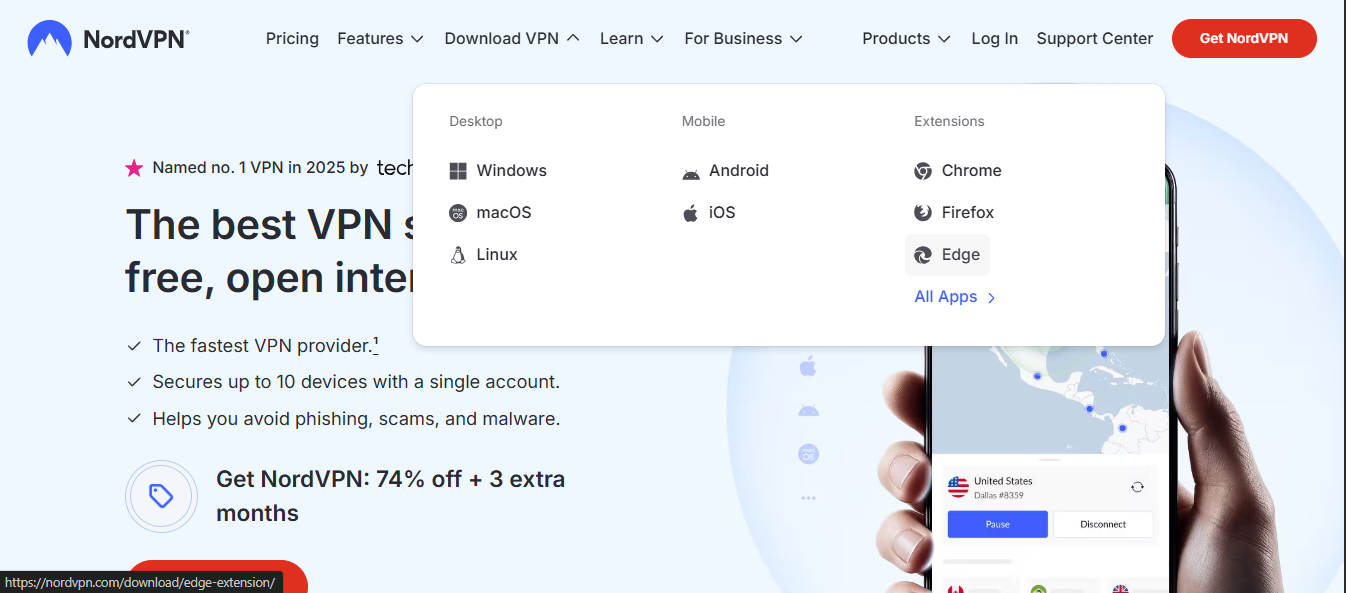
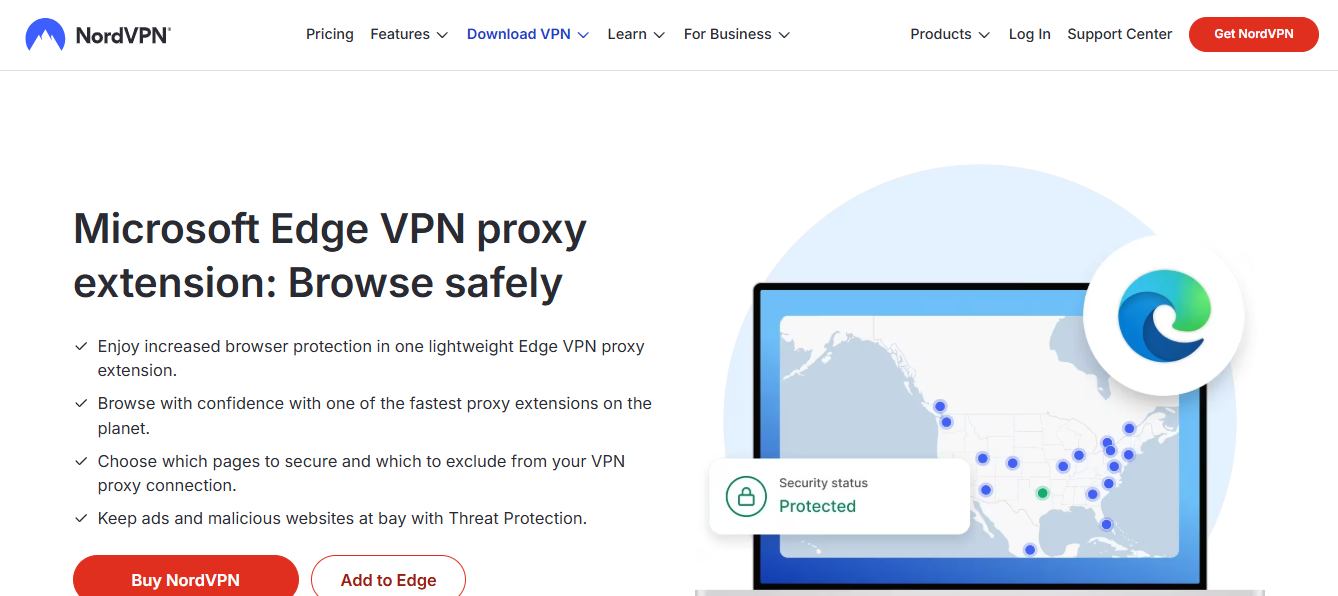
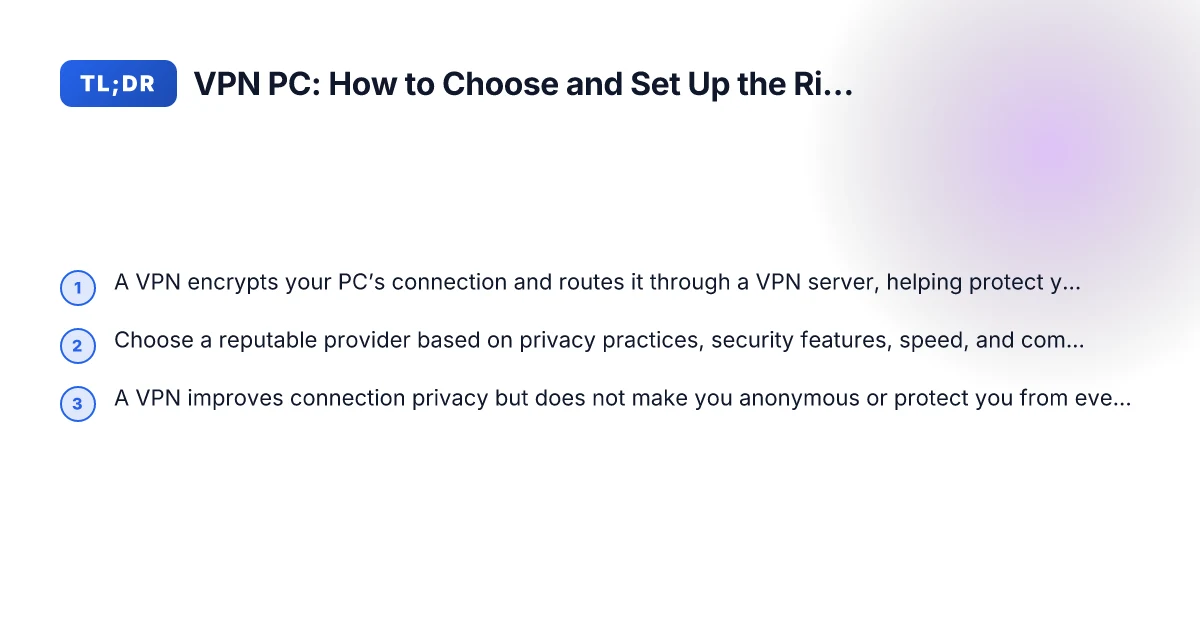
A VPN for PC is an app or built-in service that creates an encrypted connection between your computer and a VPN server. It can help protect your traffic on public Wi-Fi, reduce what your local network can see, and give you an IP address associated with the server location. To use one, choose a trustworthy VPN provider, install its Windows or other PC-compatible app, sign in, and connect to a suitable server.

Editor's pick: NordVPN — fast, secure VPN — Strong encryption, a no-logs policy and apps for every device. 30-day money-back guarantee. Get NordVPN →
Compare VPN protocols for PC use
| Protocol | Speed | Security | Best use | Common limitation |
|---|---|---|---|---|
| WireGuard | Fast | Strong | Everyday browsing and streaming | Not supported by every VPN |
| OpenVPN | Good | Strong | Flexible, reliable connections | Can be slower than newer protocols |
| IKEv2/IPsec | Good | Strong | Switching between networks | Support varies by app |
| L2TP/IPsec | Moderate | Basic | Older device compatibility | Less preferred for modern use |
| PPTP | Fast | Weak | Legacy compatibility only | Not suitable for sensitive data |
| Automatic selection | Varies | Depends on protocol | Simple setup | App chooses the protocol |
Compiled November 2026; check the provider's site for current details.
| VPN | Obfuscation | From / month | Plan | Free plan | Refund | Alipay | UnionPay | Crypto | Website opens in China | Trustpilot | |
|---|---|---|---|---|---|---|---|---|---|---|---|
 ZoogVPN | Turn on manually Shadow | $2.49/mo | 27 months: $59.99 | Yes | 7 days | ✓ | ✓ | ✓ | ✓ | Official site blocked; our special link opens (4.4 s) | 4.2/5 (195 reviews) |
 NordVPN | Turn on manually Obfuscated Servers / NordWhisper | $3.49/mo | 27 months: $94.23 | No | 30 days | ? | ✗ | ✓ | ✓ | ✗ Blocked | 4.2/5 (51,628 reviews) |
 ExpressVPN | ✓ On by default all servers | $3.00/mo | 28 months: $84 | No | 30 days | ✗ | ✗ | ✓ | ✗ | ✗ Blocked | 4.4/5 (29,706 reviews) |
 Surfshark | ✓ On by default Camouflage, with OpenVPN | See site | See site | No | 30 days | ✗ | ✗ | ✗ | ✓ | ✗ Blocked | 4.3/5 (31,823 reviews) |
 Proton VPN | Turn on manually Stealth, free plan too | $2.99/mo | 12 months: $35.88 | Yes | 30 days | ✗ | ✗ | ✗ | ✓ | ✗ Blocked | 2.1/5 (1,040 reviews) |
 Astrill VPN | Turn on manually StealthVPN / OpenWeb | $12.50/mo | 24 months: $300 | No | See site | ✗ | ✗ | ✗ | ✓ | ✗ Blocked | 1.3/5 (110 reviews) |
 Private Internet Access | Turn on manually Shadowsocks, OpenVPN only | $2.03/mo | 40 months: $81.2 | No | 30 days | ✗ | ✗ | ✗ | ✗ | ✗ Blocked | 4.2/5 (11,033 reviews) |
 CyberGhost | Turn on manually selected servers | $2.19/mo | 28 months: $61.32 | No | 45 days | ✗ | ✗ | ✗ | ✓ | ✗ Blocked | 4.0/5 (24,178 reviews) |
 PureVPN | Turn on manually switch to OpenVPN | $1.69/mo | 60 months: $101.55 | No | 31 days | ? | ? | ✗ | ✓ | ✗ Blocked | 4.4/5 (17,994 reviews) |
 AdGuard VPN | ✓ On by default TrustTunnel | $2.99/mo | 24 months: $71.76 | Yes | 30 days | ✓ | ✗ | ✓ | ✓ | Official site blocked; our special link opens (3.7 s) | 4.3/5 (290 reviews) |
 Mullvad | Turn on manually QUIC / Shadowsocks / LWO | $5.61/mo | €5/mo | No | 14 days | ✗ | ✗ | ✗ | ✓ | ✗ Blocked | 3.2/5 (192 reviews) |
 Windscribe | Turn on manually Stealth / WStunnel | $5.75/mo | 12 months: $69 | Yes | See site | ✗ | ✗ | ✗ | ✓ | ✗ Blocked | 4.7/5 (13,355 reviews) |
 StrongVPN | Turn on manually Scramble, OpenVPN TCP | See site | See site | No | 30 days | ✓ | ✗ | ✗ | ✗ | ✗ Blocked | 4.4/5 (2,695 reviews) |
 LightXtreme 闪连 | Not listed | $7.08/mo | 12 months: $84.99 | Yes | 30 days | ✓ | ✓ | ✓ | ✓ | ✓ Yes (3.5 s) | No page |
Prices checked 2026-11-10 on each vendor's pricing page (cheapest long plan, USD). Check the vendor's checkout for the final price.
Obfuscation checked 2026-11-14 on each vendor's site and help center: "on by default" = nothing to set; "turn on manually" = switch protocol or mode in settings; "not listed" = the vendor describes no obfuscation.
Payment methods checked 2026-11-10 on each vendor's payment pages: all 14 take cards and PayPal; ✗ = not listed, ? = the vendor's own pages disagree.
China access: whether the official website opens from mainland China networks (tests the website only, not the VPN connection). Last checked 2026-11-18 01:02 Beijing time.
Trustpilot score and review count checked 2026-11-10.
What a VPN does on a PC
When you browse without a VPN, your internet traffic travels through your internet service provider (ISP) and onward to websites and apps. A VPN encrypts traffic between your PC and the VPN server, then sends it on to its destination.
This can make it harder for someone monitoring the same public Wi-Fi network to inspect your connection. It also means your ISP generally sees that you are connected to a VPN, rather than seeing the destinations and contents of all your encrypted web sessions. The VPN provider, however, becomes an important intermediary, so its privacy practices matter.
A VPN may also make websites see the VPN server’s IP address instead of your home IP address. This is useful for some privacy and network-access needs, but it does not guarantee anonymity. Websites can still identify you through accounts, cookies, browser fingerprinting, or other information.
A VPN is not a substitute for antivirus software, software updates, strong passwords, or careful browsing. It cannot make a malicious download safe or prevent you from sharing personal information with a site. FortiClient VPN Japan: How to Connect and Troubleshoot
How to choose a VPN for PC
Start with the reason you want a VPN. You might need safer browsing on public Wi-Fi, a connection to your workplace, or access to a service while traveling. Your purpose helps determine which features matter.
Look for a provider with clear, readable privacy information. Check what data it collects, how long it keeps connection records, where it operates, and how it explains its logging claims. Independent audits can offer useful evidence, but check what was audited and when.
Consider these features:
- Strong encryption and modern protocols: Look for support for established options such as WireGuard or OpenVPN.
- Kill switch: This can block internet traffic if the VPN connection unexpectedly drops, reducing the chance of a brief exposure.
- DNS leak protection: Helps keep DNS requests within the VPN connection.
- Reliable performance: Server distance, network capacity, and your own internet connection all affect speed.
- Transparent pricing: Review renewal rates, refund terms, and limits on simultaneous devices.
- PC compatibility: Confirm that the app supports your Windows version or other desktop operating system and receives regular updates.
- Customer support: Helpful documentation and responsive support can simplify setup and troubleshooting.
Avoid choosing a VPN solely because it is free. Some free services have limited data, slower connections, fewer servers, or unclear data practices. A free option from a reputable provider may be suitable for occasional use, but investigate its limits and privacy terms before installing it. FortiClient VPN Windows: Download, Install, and Connect
| Option | Best suited to | Points to consider |
|---|---|---|
| Paid VPN app | Regular personal use | Compare privacy practices, speed, features, and renewal costs |
| Reputable free VPN plan | Occasional or low-data use | Check data limits, server choices, and any restrictions |
| Built-in PC VPN settings | Connecting to a service you already have | You usually need server details and a VPN account from an organization or provider |
How to install and use a VPN on your PC
For most people, the simplest approach is to use the official app from a reputable VPN provider.
- Choose a provider and create an account if required.
- Download the PC app from the provider’s official website or a trusted app store.
- Install the app, open it, and sign in.
- Review settings for the kill switch, startup behavior, and connection protocol.
- Select a server and choose Connect.
- Check the app’s connection status before using the internet.
For everyday privacy, a nearby server is often a good starting point because it may offer lower latency and better speeds. If you need to connect through a particular region for a legitimate reason, select a server there. Availability and performance vary.
You can also configure a VPN through your PC’s built-in network settings. This generally requires setup details from your employer, school, or VPN provider. The built-in option can be useful when an organization supplies a compatible configuration, but it may not include the extra controls found in a provider’s app.
VPN provider checklist for a PC What Is a Proxy Server? How It Works, Types, and When to Use One
| Factor | What to look for | Why it matters | How to check |
|---|---|---|---|
| Windows support | A current desktop app | Helps ensure compatibility | Check supported operating systems |
| Privacy policy | Clear data collection details | Shows what activity may be retained | Read the policy |
| Kill switch | Supported in the app | Can block traffic if the VPN drops | Check app settings |
| Protocol choice | Multiple supported protocols | Lets you balance speed and compatibility | Review app features |
| Server locations | Locations that suit your needs | Affects available connection routes | Check the server list |
| Performance | Stable speeds for your activities | Helps avoid interruptions | Test during typical use |
| Device limit | A limit that fits your devices | Determines how many devices can connect | Review plan terms |
| Support | Setup and troubleshooting help | Useful when connections fail | Check help options |
Compiled November 2026; check the provider's site for current details.
VPN speed, privacy, and common limitations
A VPN can slow your connection because traffic must be encrypted and routed through another server. The effect depends on the server’s distance and workload, the VPN protocol, your PC, and your internet service. If performance is poor, try a nearby server, switch to another recommended protocol, or check whether the VPN app needs an update.
A VPN also does not prevent every kind of tracking. A website can still associate activity with your signed-in account, and advertising or tracking cookies may continue to work. Use browser privacy settings and account security measures alongside the VPN.
Keep these limitations in mind: Free VPN Extension for Microsoft Edge: What to Know Before Installing
- The VPN provider can handle your traffic, so choose one you trust.
- A VPN may not bypass every network restriction or streaming service’s regional controls.
- Some websites may ask for extra verification when they detect a VPN IP address.
- A VPN does not stop phishing, unsafe downloads, or weak passwords.
- Your connection is only protected while the VPN is connected, unless the app has a correctly configured kill switch.
Troubleshooting a VPN on a PC
If the VPN will not connect, first check that your internet works without it and confirm that your account is active. Restart the app, try a different server, and install any available app updates.
If websites are unusually slow or fail to load, change to a nearby server or another supported protocol. Temporarily disconnecting can help identify whether the VPN is causing the issue, but avoid using sensitive services on an untrusted network without protection.
For recurring problems, check the provider’s status page and troubleshooting instructions. On a work or school PC, contact the organization’s IT support before changing network settings, since its configuration may be managed.
Troubleshoot common VPN problems on a PC GlobalProtect VPN Not Connecting: Causes and Fixes
| Problem | First check | Try next | If it continues |
|---|---|---|---|
| VPN will not connect | Internet connection | Choose another server | Restart the app |
| Connection is slow | Server distance | Try a nearby server | Switch protocol |
| Websites will not load | VPN connection status | Disconnect and reconnect | Try another server |
| VPN drops repeatedly | Network stability | Update the VPN app | Check firewall settings |
| App will not open | App update | Restart the PC | Reinstall the app |
| Login fails | Username and password | Check account status | Reset the password |
| Local devices are unreachable | VPN network settings | Check local network access options | Contact provider support |
Compiled November 2026; check the provider's site for current details.
Recommendation
For most PC users, a well-reviewed VPN from a transparent provider is the easiest choice. Prioritize clear privacy practices, current security features, dependable performance, and an app that supports your computer. Use a nearby server for everyday browsing, keep the app updated, and remember that a VPN is one layer of online protection, not a guarantee of anonymity or complete security.